

How to Make a Rekenrek
📝 This post, *How to Make a Rekenrek, was originally published in 2015 and has been updated with new information and resources.
The first time I heard the word *rekenrek*, I honestly had no idea what everyone was talking about! I had just moved from teaching third grade to first grade and was attending a math workshop when the presenter pulled one out. Within minutes, I was hooked. I couldn’t believe how such a simple tool could help children see numbers so clearly.
When I returned to school, I wanted every student to have one. Unfortunately, our budget didn’t allow us to purchase a classroom set, so I decided we’d make our own instead. I built the frames, my students added the beads, and together we created a class set of rekenreks. It turned into a wonderful beginning-of-the-year project, and my students were so proud to take them home at the end of the school year.
What Is a Rekenrek?
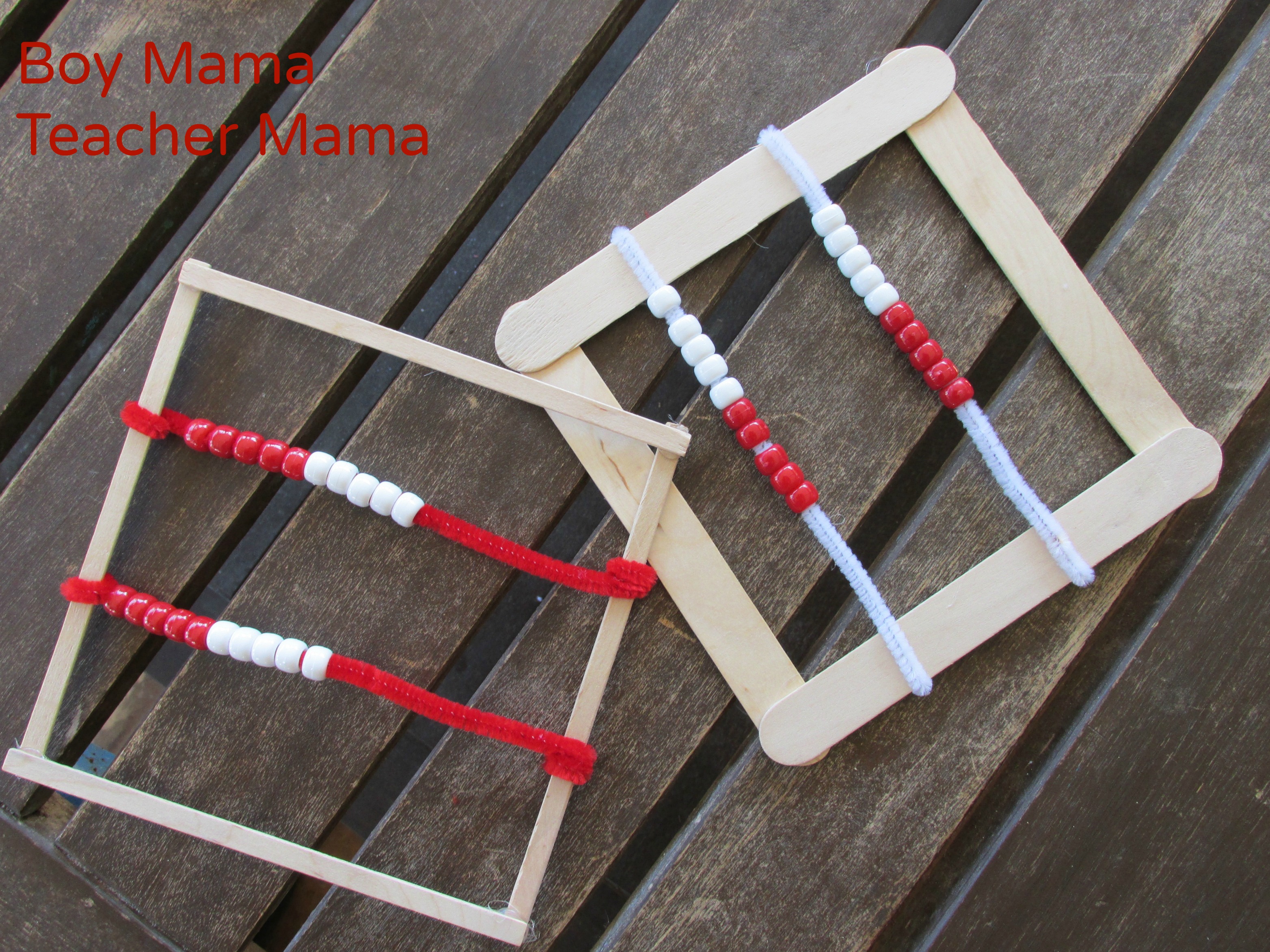
A rekenrek (pronounced REK-en-rek) is a simple math tool that looks a bit like an abacus. It has two rows of ten beads—five red and five white on each row—for a total of twenty beads. Developed by Dutch mathematician Adrian Treffers, the rekenrek helps young children develop number sense by allowing them to see numbers in groups rather than counting one by one.
Think of a rekenrek as a bridge between counting and mental math. Instead of relying on one-to-one counting, students begin to recognize number patterns, make tens, and solve problems more efficiently.
Why Use a Rekenrek?
The rekenrek may look simple, but it is one of the most powerful number sense tools you can put into a child’s hands. It helps students build a strong foundation for addition, subtraction, and mental math by making numbers visual and easy to manipulate. Unlike worksheets, a rekenrek allows students to move, see, and talk about numbers, making abstract math concepts much easier to understand.
Here’s why teachers love using rekenreks:
✔️ Helps students see numbers in groups of five and ten
✔️ Builds strong number sense
✔️ Encourages subitizing instead of counting one by one
✔️ Makes addition and subtraction visual and concrete
✔️ Develops mental math strategies naturally
✔️ Works well for whole-group instruction, small groups, math centers, intervention, and independent practice
Why Make Your Own?
Classroom rekenreks can be expensive, especially when you need one for every student. Making your own is inexpensive, surprisingly easy, and gives students ownership of a math tool they’ll use all year long. My students loved helping assemble their own rekenreks, and because they helped make them, they took great care of them throughout the year.
How Do You Use a Rekenrek?
Using a rekenrek is simple! All of the beads begin on the right side. Students slide beads to the left to represent numbers and solve problems.
For example, to show the number 7, students slide 5 beads on the top row and 2 more beads, instantly seeing 5 + 2 = 7 without counting each bead individually.
As students gain confidence, they begin recognizing these number patterns automatically. Before long, they stop counting every bead and start thinking more flexibly about numbers—a huge step toward developing strong mental math skills.
One of my favorite moments was watching students stop counting every single bead and start explaining what they noticed instead. I’d hear comments like, “I know that’s 8 because I see 5 and 3 more,” or “You only need 2 more to make 10!” Those conversations told me they were beginning to see numbers as groups and relationships instead of individual objects—and that’s exactly what a rekenrek is designed to do.
Materials Needed
✔️4 jumbo popsicle sticks
✔️2 pipe cleaners
✔️ 10 white pony beads
✔️ 10 red pony beads
✔️ hot glue gun
📝 Most of these supplies can be found at dollar stores or craft stores, making this an inexpensive project for an entire class. Or you may already have everything in your craft cabinet!
How to Make a Rekenrek

Step 1
Hot glue the four jumbo popsicle sticks together to create a square frame.
Step 2
Hot glue two pipe cleaners to the back of one side of the frame. Any color works—I happened to use white.
Step 3
Thread five white beads and five red beads onto each pipe cleaner.
Step 4
Secure the opposite ends of the pipe cleaners to the other side of the frame with hot glue.
Step 5
Trim off any extra pipe cleaner.
That’s it! Your homemade rekenrek is ready for learning.
Version 2: Woodsie Stick Rekenrek
If you prefer, you can also make a Woodsie Stick Rekenrek instead of jumbo popsicle sticks. Simply wrap the pipe cleaners around the woodsie sticks rather than gluing them in place. This version works well, although I found the jumbo popsicle stick version to be sturdier for everyday classroom use.

Try These Activities:
Once your students are done, the fun really begins! These are some of my favorite ways to introduce the tool during the first few weeks of school.
💡 Show Me a Number— Call out a number and have students build it.
💡 Build It Two Ways — Challenge students to show the same number using different combinations of beads.
💡 Addition Practice — Build two numbers and find the total.
💡 Turn-Around Facts — Show 3 + 5, then 5 + 3, and discuss why the answer stays the same.
💡 Subtraction Practice— Start with all twenty beads on one side and slide beads back to subtract.
💡 Subitizing Warm-Up — Flash a rekenrek configuration and have students identify the number without counting.
💡 Make Ten — Build a number and determine how many more are needed to make ten.
💡 Partner Practice — One student builds a number while a partner identifies and explains it.
One of my favorite things about using rekenreks was listening to students explain their thinking. Instead of simply giving an answer, they could show exactly how they solved the problem. Those math conversations became just as valuable as the answers themselves.
Keep the Learning Going with Rekenrek Bingo
Once your students have made their rekenreks and had plenty of opportunities to practice using them, they’re ready for a fun challenge! My Rekenrek Bingo Game is a simple, engaging way to reinforce subitizing, number sense, and mental math while keeping students excited about learning.
Students already know how to play Bingo, so very little explanation is needed! Instead of matching numerals, they identify numbers shown in rekenrek form… Instead of matching numerals, students identify numbers shown in rekenrek form on their Bingo cards. As each number is called, they use their understanding of number patterns—not one-by-one counting—to find the correct space. The first player to get three in a row or a full blackout wins!
This low-prep game is perfect for math centers, small groups, partner practice, whole-class review, or even as a fun math warm-up. Best of all, students are strengthening important number sense skills while thinking they’re simply playing a game.

💚 Grab my Rekenrek Bingo Game from my TpT store here and keep the learning going long after your homemade rekenreks are complete!
Even years later, I still think making our own class set of rekenreks was one of the best decisions I made. They were inexpensive, hands-on, and became one of our most-used math tools throughout the year. Sometimes the simplest classroom materials become the most powerful learning tools.
If you’re looking for more ways to build number sense, be sure to check out my Subitizing Activities and Ten Frame Activities These hands-on math resources work beautifully together to help young learners develop confidence and flexibility with numbers.

If this is your first time visiting Boy Mama Teacher Mama, welcome!
Did you know that you can also find us on Facebook, Instagram, Pinterest, and Teachers Pay Teachers?
© Boy Mama Teacher Mama 2026
All Rights Reserved