

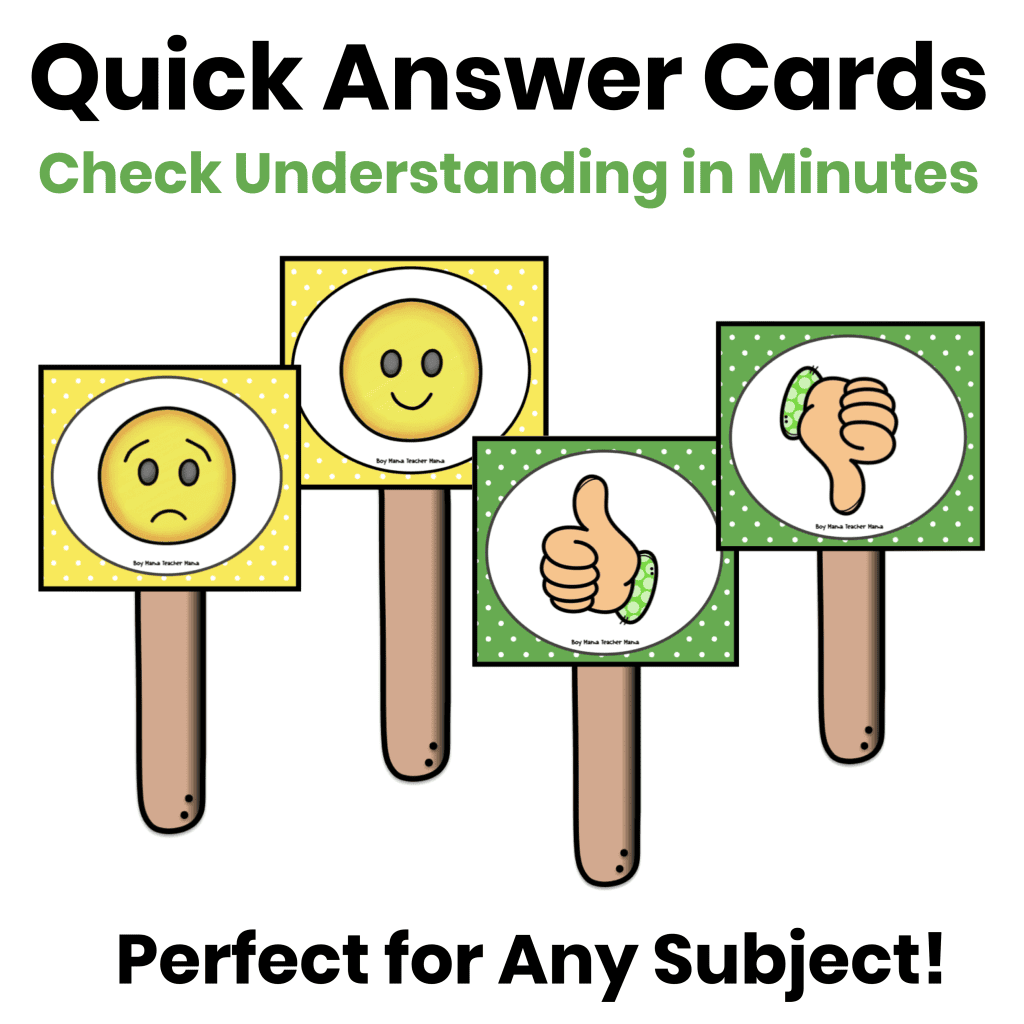
Quick Answer Cards for Assessments
📝 This post, Quick Answer Cards, was originally published in 2013 and has been updated with new classroom ideas and examples.
Have you ever finished a lesson and wondered, Did everyone really understand that? Or maybe you’ve found yourself with five unexpected minutes before lunch, recess, or specials and wanted something worthwhile to do with the class.
That happened to me all the time. Instead of handing out another worksheet or calling on just a few students, I reached for my Quick Answer Cards. I always kept a stack sitting by our gathering place so they were ready whenever I needed a quick review or wanted to check students’ understanding before moving on.
Within seconds, every child had answered, and I had a good picture of who understood the concept and who needed a little more practice. The students thought they were playing a game, while I was quietly checking to see if we were ready to move on. They quickly became one of those classroom tools I reached for almost every day.
Why Quick Answer Cards Work
One of the biggest advantages of Quick Answer Cards is that every student participates. Instead of hearing from just a handful of volunteers, you can quickly see what the entire class is thinking. In just a few seconds, you know who understands the concept and who may need a little more practice.
I also loved how flexible they were. We used them to introduce new concepts, review skills we’d been practicing, check understanding before moving on, and even make good use of those unexpected five minutes that always seem to appear during the school day.
Best of all, I got immediate feedback without another worksheet to grade. That made it easy to adjust my teaching right away, and because the students enjoyed using the cards, they never felt like they were taking a test.
How We Used Quick Answer Cards
Making the cards couldn’t have been easier. I printed each pair of response cards and glued them to opposite sides of a popsicle stick, with Yes on one side and No on the other. I made a class set of each pair and stored them in jars near our gathering place so they were always ready to use.
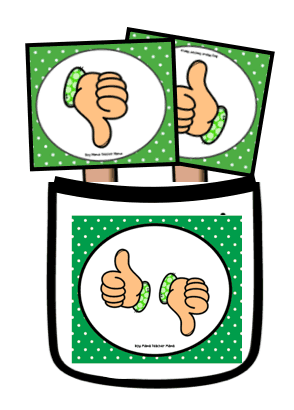
When it was time to use the cards, I simply handed each student one. I asked a question, showed a problem, or read a statement aloud, and students responded by holding up the side they thought was correct.
One thing we talked about right away was trusting our own thinking instead of looking around to see what everyone else was holding up. The goal wasn’t to get every answer right—it was to help me see what students understood and what we still needed to practice.
The best part was how quickly we could move from one question to the next. In just a few minutes, every student had participated, and I had a clear picture of how the class was doing.
The best part was how quickly we could move from one question to the next. In just a few minutes, every student had participated, and I had a clear picture of how the class was doing. If most of the class understood the concept, I could confidently move on with the lesson and make a mental note to meet with one or two students later for a little extra practice. It allowed me to give those students the support they needed privately instead of putting them on the spot in front of the class.
Quick Answer Cards in Action
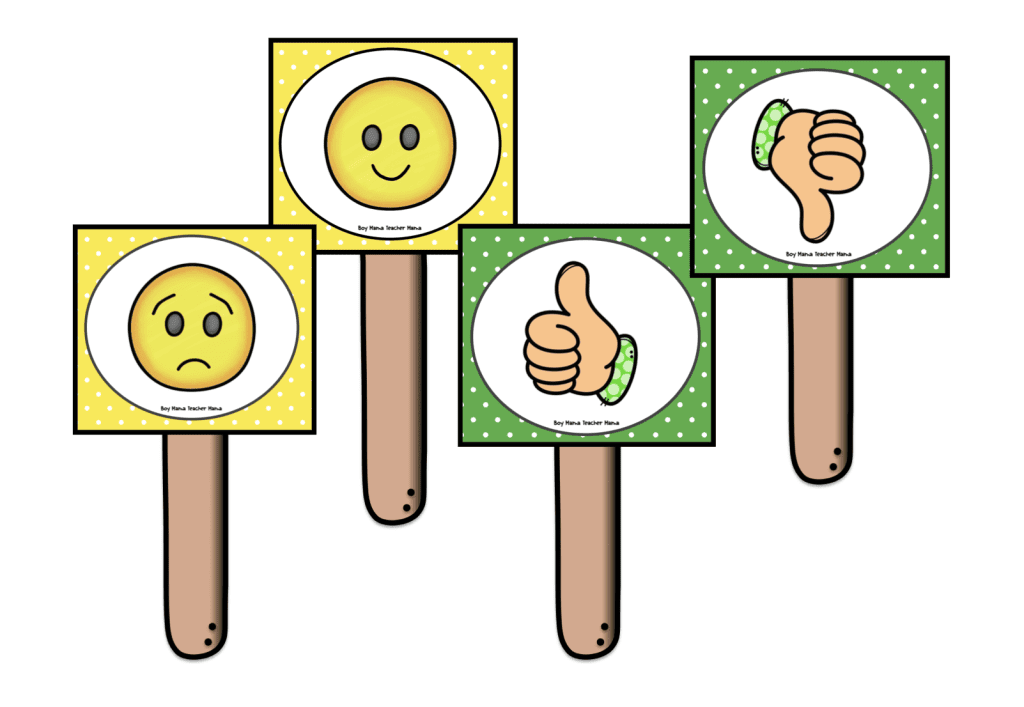
Odd and Even
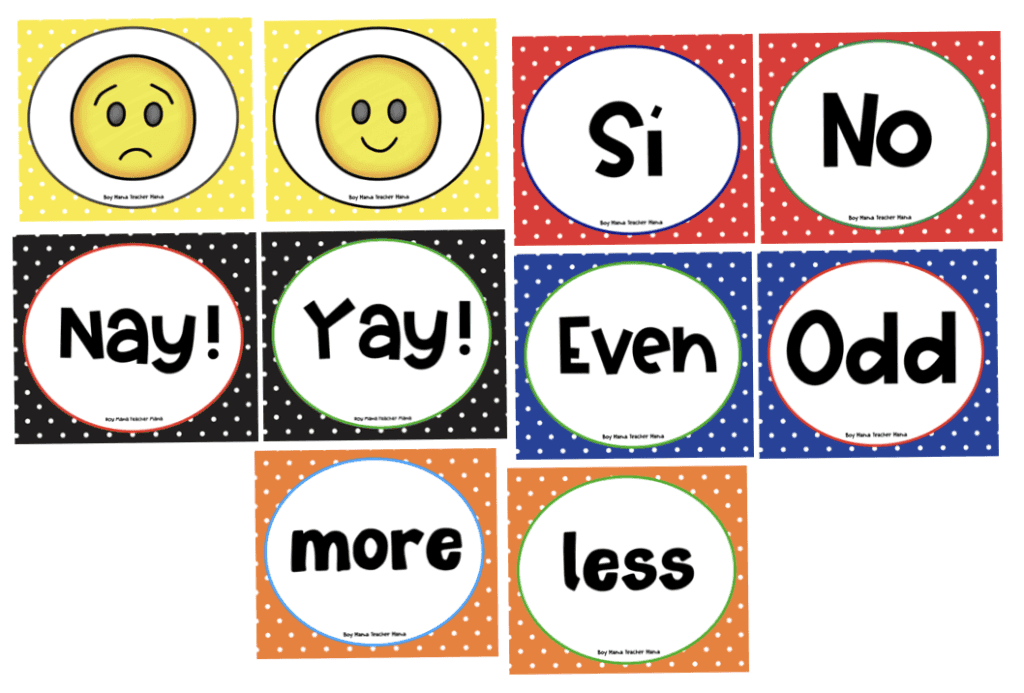
One of my favorite ways to use the cards was during our unit on odd and even numbers. Each student received one Odd card and one Even card. I would call out a number, and students quickly held up the correct card.
It was a fast, easy way to check understanding without giving another worksheet. If I called out 12, students held up Even. If I called out 9, they held up Odd. Within seconds, I knew whether we were ready to move on or if we needed a little more practice. Best of all, the students thought they were playing a game instead of being assessed.
True or False
The True/False cards quickly became useful across almost every subject we studied. During math, I might say, “One plus two equals four,” while during science I could ask, “Whales are fish.” In reading, we used them to answer comprehension questions, and during social studies they helped us review facts we had learned.
I also found them helpful for correcting common misconceptions. If several students held up the wrong answer, it gave us the perfect opportunity to stop, talk about it, and learn together before moving on. No matter the subject, every student had a chance to think, respond, and participate.
Yes or No
The Yes/No cards were probably the most versatile set because we could use them for just about anything. They worked well for math, reading, science, and social studies, but they were also perfect for classroom discussions.
Sometimes I used them to review academic concepts, and other times we used them to talk about classroom expectations and social situations. Questions like, “Is it okay to leave someone out?” led to thoughtful conversations about kindness and treating others with respect.
Of course, we also mixed in a few fun questions just for laughs. Asking, “Do you like ice cream?” or “Would you rather have a pet dinosaur?” always got everyone smiling while giving us a quick brain break before moving on to the next activity.
Happy or Sad
The Happy/Sad cards were especially helpful with my younger students and anyone who wasn’t reading confidently yet. Since the cards use simple pictures instead of words, every child could participate successfully.
We often used them while reading stories. I would ask how a character was feeling or whether a choice made a character happy or sad, and students would hold up the appropriate side of their card. They also worked well for discussing kindness, making good choices, and talking about emotions. These cards can also be used for yes/no, true/false, and fact/fiction!
Sometimes the simplest response cards are the most powerful because they give every child a voice, even those who are still learning to read.
Sí or No
The Sí/No cards worked just like the Yes/No cards but added a little Spanish vocabulary at the same time. Whether your students are learning Spanish or you simply want to introduce a few new words, these cards make it easy to incorporate another language into your daily routine.
It doesn’t take long for students to remember that sí means yes and no means no. Before you know it, they’ll be confidently answering questions using their new vocabulary while reviewing classroom concepts at the same time.
NEW! Fact or Fiction
The Fact/Fiction cards are a fun way to build critical thinking while reinforcing an important reading skill. As students learn the difference between facts that can be proven and fiction that comes from the imagination, they can quickly respond by holding up the correct side of their card.
These cards also work well beyond reading. They’re a great way to review science and social studies concepts while encouraging students to think carefully before answering.
Aye or Nay
The Aye/Nay cards were always one of my students’ favorites. Even though they work just like the Yes/No cards, the different vocabulary made the activity feel brand new.
When I introduced the cards, I explained that during a vote people often say, “All in favor say aye. All opposed say nay.” My students loved pretending they were taking part in an official vote, and before long they were using the words without even thinking about it.
It’s funny how something as simple as changing the words can make a familiar activity feel fresh and exciting.
So Many More Possibilities
Once I started using Quick Answer Cards, I found more and more ways to incorporate them into our day. We used them to compare greater than and less than, identify nouns and verbs, sort fact from opinion, distinguish between fiction and nonfiction, and recognize capital and lowercase letters. They even worked for reviewing long and short vowel sounds, living and nonliving things, and many other skills.
The possibilities are almost endless. Once you start thinking about concepts that have two possible responses, you’ll probably find yourself coming up with new ideas all year long.
Grab Your Quick Answer Cards
Ready to give Quick Answer Cards a try in your own classroom? They’re easy to prepare, simple to use, and one of those teaching tools you’ll find yourself reaching for again and again.
💚 Grab Quick Answer Cards from TPT
Final Thoughts on Quick Answer Cards
Sometimes the simplest classroom tools become the ones you use the most. My Quick Answer Cards weren’t complicated, but they were one of the most useful tools in my classroom. They helped me quickly check understanding, kept every student involved, and made good use of those extra few minutes that always seemed to pop up during the school day.
If you’re looking for an easy way to check understanding while keeping the whole class involved, I hope these Quick Answer Cards become one of those classroom tools you reach for again and again.

If this is your first time visiting Boy Mama Teacher Mama, welcome!
Did you know that you can also find us on Facebook, Instagram, Pinterest, and Teachers Pay Teachers?
© Boy Mama Teacher Mama 2026
All Rights Reserved


Pingback: Teacher Mama: 12 Teaching Tools for Back to School - Boy Mama Teacher Mama