

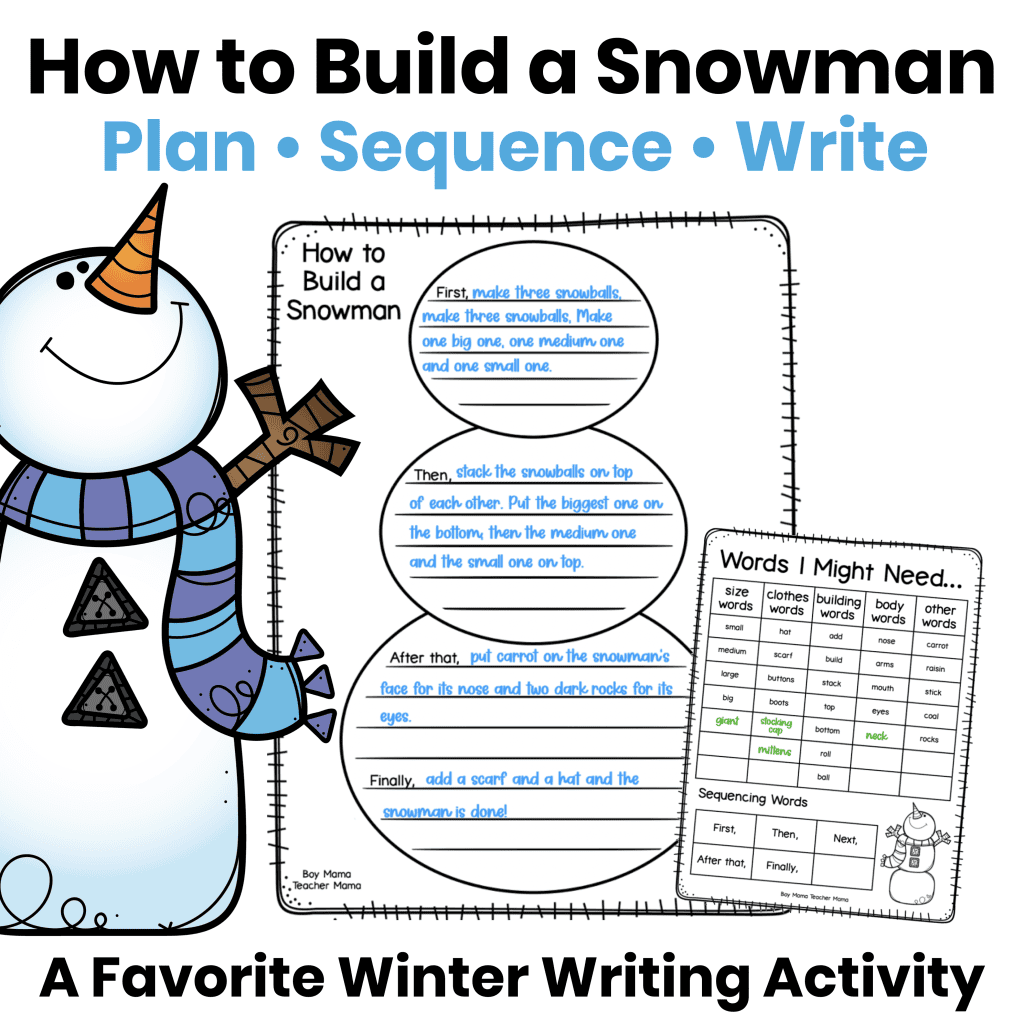
How to Build a Snowman Writing Activity
📝 This post, How to Build a Snowman Writing Activity, was originally published in 2017 and has been updated with new information and resources.
Every winter, my boys and I hope for snow—and even more importantly, a snow day! We bundle up, build snow ramps, make snowmen, and have snowball fights in the backyard. To improve our chances, we try every snow day superstition we can think of. We put white crayons in the freezer, sleep with a spoon under our pillows, wear our pajamas backwards, and even throw open the freezer door and yell, “SNOW DAY! SNOW DAY!” at the top of our lungs.
Sometimes it works…and sometimes the snow falls just enough that we still have to head to school.
Those snowy mornings were always exciting because I knew my first graders would be just as thrilled as my own boys. There was no point pretending they were going to focus on our regular lesson plans! Instead, I decided to lean into their excitement and created a quick writing activity called How to Build a Snowman. It turned out to be one of our favorite winter writing lessons and a wonderful way to practice sequencing, transition words, and procedural writing.
Why Teach Procedural Writing?
Learning to write directions is about much more than telling someone how to build a snowman. Procedural writing teaches students how to organize their thinking, put ideas in the correct order, and communicate clearly so someone else can successfully follow their steps.
Along the way, students practice sequencing, transition words like first, next, then, and finally, and adding enough detail so their directions make sense. Because building a snowman is something many children are familiar with, they can focus on the writing instead of trying to think of what to say.
Think Before You Write
Before my students ever started writing, we spent time organizing our ideas. I like using what I call a Think Sheet—a simple planning page where students sketch or jot down each step before turning it into a complete piece of writing.
For this activity, students drew the steps for building a snowman using the prompt words first, next, then, after that, and finally. Once they had their ideas organized, they used their Think Sheet to write clear, step-by-step directions.
One of my favorite things about this lesson was that every student’s snowman—and every set of directions—looked a little different. It was the perfect opportunity for students to be creative while practicing sequence words and procedural writing.
What’s Included in How to Build a Snowman?
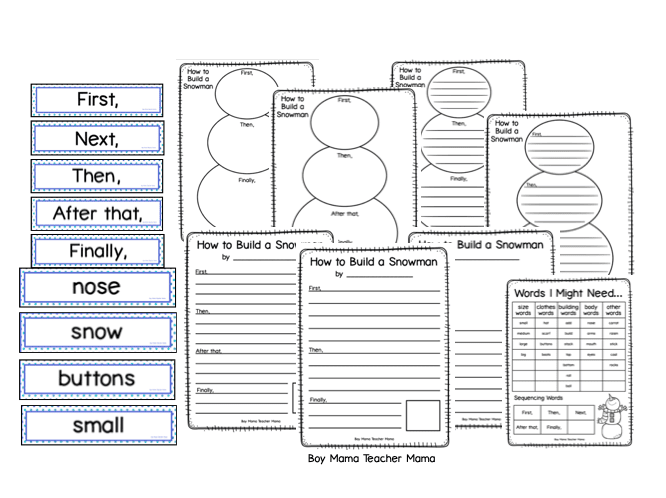
The updated How to Build a Snowman Writing Activity includes everything you need to guide students from brainstorming to a finished piece of procedural writing. Students begin with a Think Sheet to organize their ideas before writing step-by-step directions using transition words like first, next, then, after that, and finally. The resource also includes differentiated writing pages, planning templates, final copy pages, and time and snowmen words, making it easy to support writers at different levels while keeping everyone working on the same lesson.
💚 Grab the updated How to Build a Snowman Writing Activity on TPT here.
Differentiate the Activity
One of the reasons I kept coming back to this lesson was because it was so easy to adapt for different learners.
Make It More Challenging
✏️ Encourage students to add additional steps using more transition words.
✏️ Have students include extra details or descriptive words to make each direction clearer.
✏️ Remove the sequence words and let students organize their directions independently while making sure the steps stay in the correct order.
Make It Easier
✏️ Provide the transition words (first, next, then, finally) for students to copy.
✏️ Let students cut out and glue the transition words onto their writing page before they begin.
✏️ Create a word bank with snowman-building vocabulary to support young writers.
✏️ Simplify the activity by using only first, next, and finally.
Looking for Another How to Build a Snowman Option?
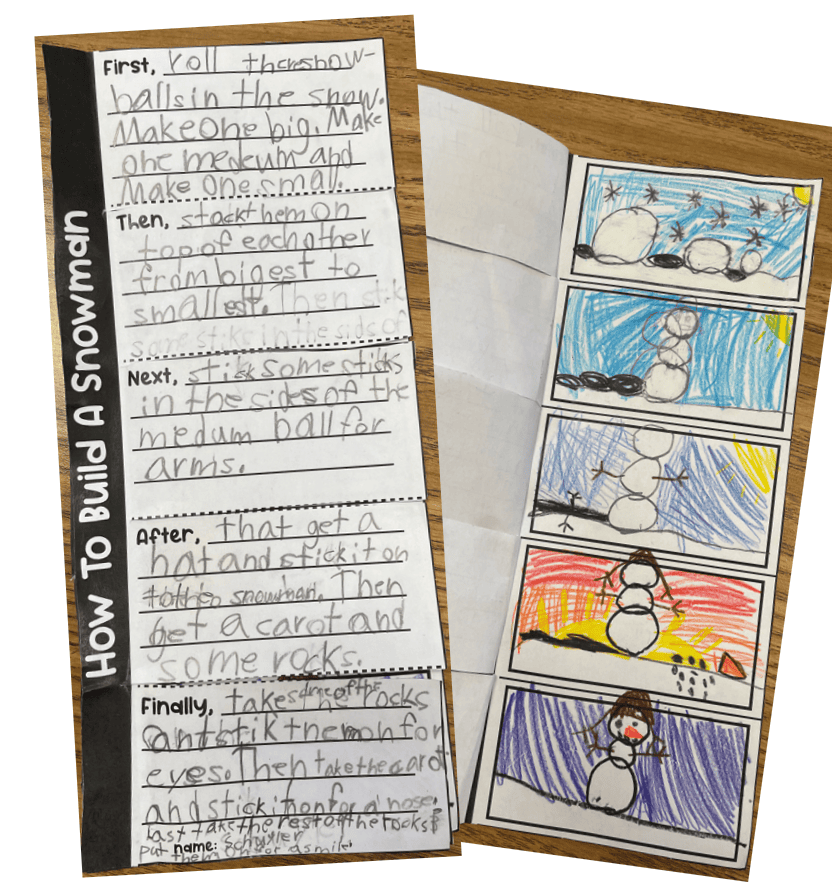
If your students love interactive projects, you might also enjoy my How to Build a Snowman Lift-the-Flap Book.
Instead of completing a traditional writing page, students create a fun lift-the-flap book by writing and illustrating each step of building a snowman using the transition words first, then, next, after that, and finally. It’s a fun alternative that makes procedural writing even more hands-on and creates an adorable keepsake to take home.
💚 Grab the How to Build a Snowman Lift-the-Flap Book on TPT here.
Wrapping
A simple and unexpected snowfall turned into one of the best writing activities of the year. I still think about that lesson every winter and hope for another snowy day as an excuse to pull it out again. If you’re looking for a seasonal way to practice sequencing and procedural writing, give this activity a try. I have a feeling it will become one of your students’ favorite winter writing lessons too.

If this is your first time visiting Boy Mama Teacher Mama, welcome!
Did you know that you can also find us on Facebook, Instagram, Pinterest, and Teachers Pay Teachers?
© Boy Mama Teacher Mama 2026
All Rights Reserved


Pingback: Teacher Mama: FREE How Do You Make Hot Cocoa? Writing Prompt - Boy Mama Teacher Mama