
Creating Essential Agreements
Meeting after meeting after meeting… that’s the way the school year always begins for teachers. And during one of those meetings, we’re inevitably told, “Don’t forget to write your essential agreements!”
We all know it has to be done, but for some reason we’re reminded every year as if we might just forget.
Here’s the thing, though. We’re told to create essential agreements, but no one ever tells us how. Not only that, we’re expected to magically come up with a process that will keep our classroom running smoothly all year long.
Nope. It just doesn’t work that way.
Over the years, I developed a process for creating essential agreements with my students that I’ve refined year after year. It gives students real ownership instead of simply handing them a list of rules. I hope you’ll find it helpful and that it makes creating essential agreements much more meaningful in your own classroom.
What Are Essential Agreements?
An essential agreement is a set of promises that students and teachers make to one another about how they want their classroom to feel and how they will treat each other throughout the year. Unlike a traditional list of classroom rules created by the teacher, essential agreements are developed together as a class. This gives students a voice in creating the kind of learning environment they want to be part of.
Essential agreements focus on positive behaviors instead of a long list of “don’ts.” Rather than telling students what they can’t do, they encourage everyone to think about what they should do to help themselves and others learn. For example, instead of “Don’t interrupt,” students might agree to “Listen while others are talking.” Instead of “Don’t run,” they might decide to “Walk safely in the classroom.”
When students help create the agreements, they are much more likely to remember them, understand why they matter, and take ownership of following them. Instead of feeling like rules that were handed down by the teacher, essential agreements become commitments the entire class has made together.
Why Create Essential Agreements Instead of Rules?
Many parents and even some teachers wonder why schools have shifted from traditional classroom rules to essential agreements. The answer is actually pretty simple.
Essential agreements aren’t about having fewer rules—they’re about helping students understand why those expectations matter and giving them ownership in creating a classroom where everyone can learn.
Don’t get me wrong. I believe classrooms need rules and clear expectations. Children thrive when they know what is expected of them. The difference is how those expectations are introduced.
Traditional classroom rules are usually written by the teacher and shared with students at the beginning of the year. Essential agreements, on the other hand, are created with students instead of for them. When children have a chance to share their ideas and help develop the expectations for the classroom, they are much more likely to understand them, remember them, and follow them.
Creating essential agreements also changes the conversation. Instead of focusing on a list of things students can’t do, they begin thinking about the kind of classroom they want to be part of. They start talking about kindness, respect, responsibility, safety, and helping one another learn. Those conversations are much more powerful than simply reading a list of classroom rules.
Perhaps the biggest benefit is that essential agreements give students ownership. When problems come up later in the year, I don’t have to remind students that it’s my classroom rule. Instead, I can simply say, “Remember, these are the agreements we made together.” That simple shift makes a big difference because students aren’t just following my rules—they’re remembering the promises they made to one another.
How to Create Essential Agreements with Your Class
One of the most important things I’ve learned over the years is that this process doesn’t happen in a single lesson.
In fact, I don’t create our essential agreement on the first day of school.
I usually begin around the third day of school. By then I’ve had a chance to get to know my students, they’ve started getting to know one another, and we’ve experienced enough of our classroom together to have meaningful conversations.
I’ll admit it—I was often reminded that my essential agreement needed to be finished right away. But I believed in the process, and waiting just a couple of days always resulted in a much stronger agreement because students truly understood what we were creating together.
Step 1: Discover What Students Already Believe
I begin by asking students one simple question:
“What do you think is the most important rule at school?”
Students write their answer as best they can and draw a picture to match. I collect their papers but don’t discuss them yet. Instead, I quietly tuck them away for later.
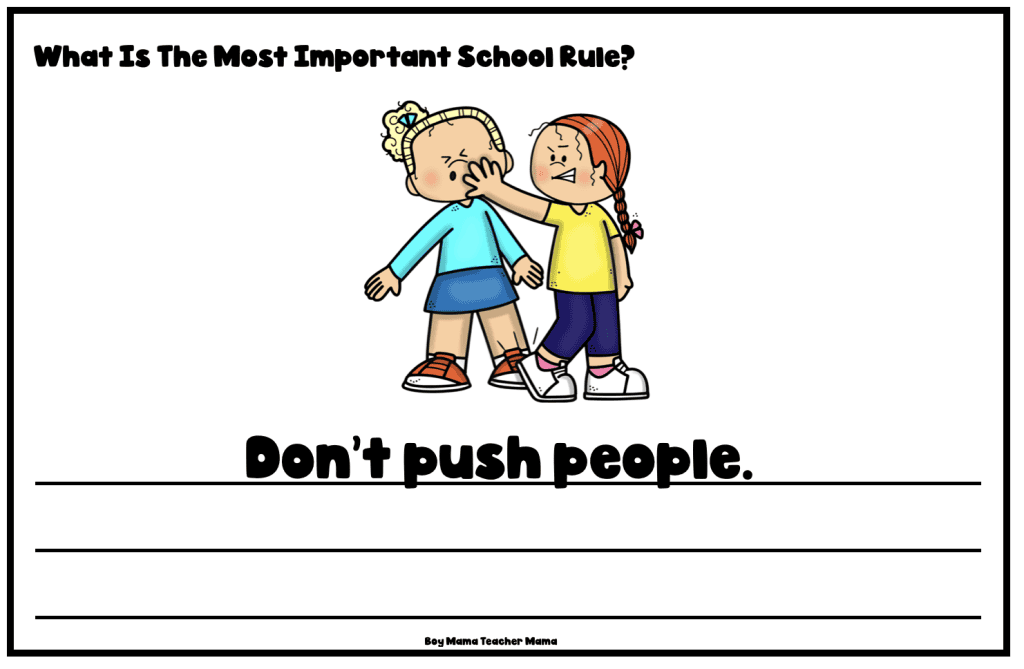
At this point, students have no idea they’ll be seeing their papers again, and that’s exactly what makes the reflection at the end of this lesson so powerful.
Want to try this first step with your class?
💚 Download my FREE “What Is the Most Important Rule at School?” writing page to kick off your own essential agreement discussions.
Step 2: Read Back-to-School Rules

Next, I read Back-to-School Rules by Laurie Friedman.
As we read, we begin noticing something interesting. Nearly every rule in the book is written as a “Do Not” rule.
Do not run in the halls.
Do not throw food.
Do not interrupt.
This naturally leads to a great discussion about the difference between rules and agreements. We talk about how rules tell us what not to do, while essential agreements tell us what we will do instead. That simple shift helps students begin thinking about their behavior in a completely different way.
Step 3: Flip the Rules
Now comes one of my students’ favorite parts of the lesson.
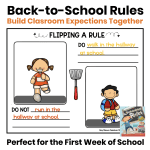
I pull out a toy spatula and a stack of paper pancakes with “Do Not” rules written on them. One by one, students come to the front of the room, flip a pancake, and together we change each rule into a positive agreement.
For example, “Do not hit.” becomes “Keep your hands to yourself.” The rule tells us what not to do, while the agreement tells us how we will behave.
The students love the visual of flipping the pancakes, but more importantly, they begin changing the way they think about classroom expectations. Before long, the room is filled with conversations about what we should do instead of what we shouldn’t do.
If you’d like to use this activity in your own classroom, my Back-to-School Rules: Flipping the Rules Activity includes the pancake activity, student reflection pages, and everything you need to guide your class through the entire process from beginning to end.

💚 Grab the Back-to-School Rules: Flipping the Rules Activity on TPT.
Step 4: Create Your Class Essential Agreement
Once we’ve practiced flipping the rules, I bring back the writing students completed at the beginning of the lesson.
Almost every paper contains another “Do Not” rule.
Together, we read through the rules and begin sorting them into groups. Rules about using classroom materials go together. Rules about treating one another respectfully become another group. Rules about safety become another.
As students begin noticing the patterns, they quickly realize many of their rules are saying the same thing in different ways.
Once we’ve organized the ideas, we decide which categories are the most important. We usually narrow everything down to seven or eight big ideas and then vote on the ones we feel are most important for our classroom.
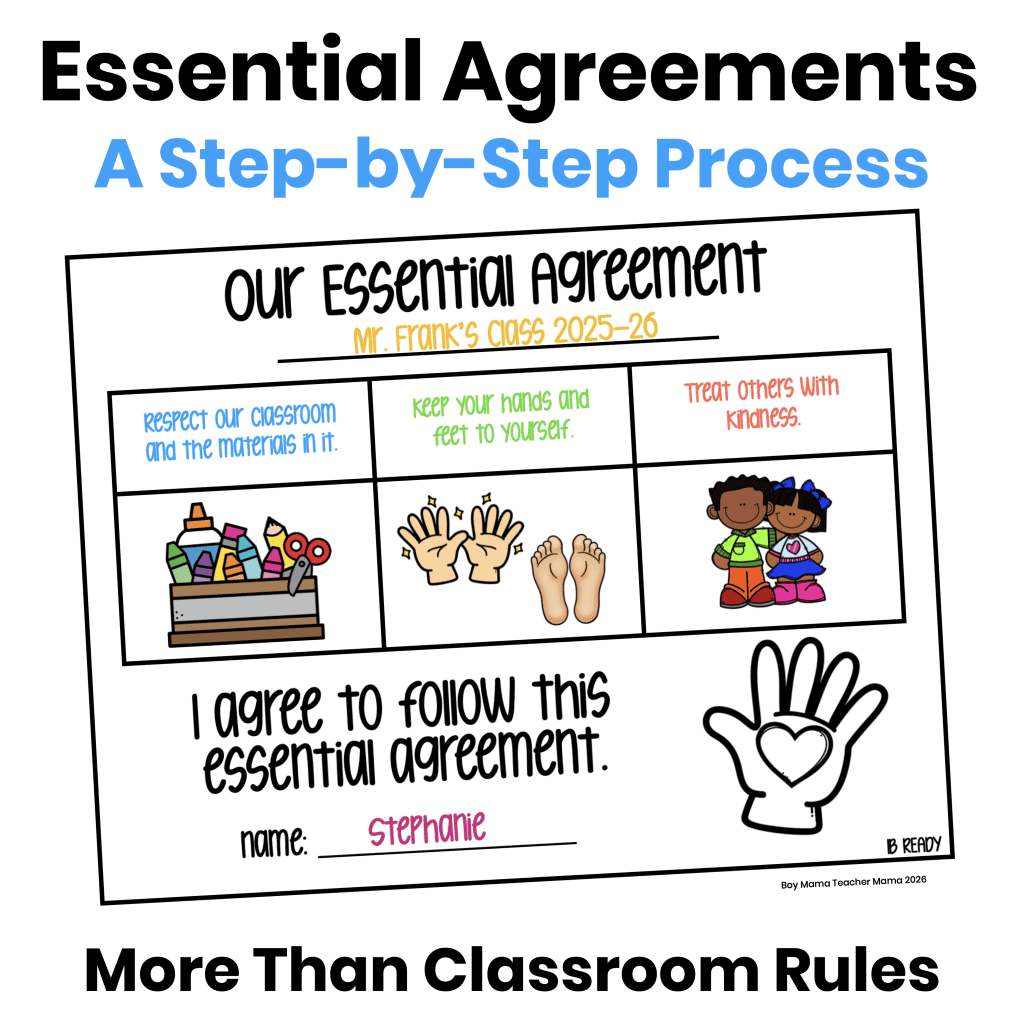
After we’ve chosen our final agreements, we work together to flip each one into a positive statement. Those statements become our classroom’s essential agreement.
I do reserve the right to add one more agreement if I think it’s needed.
Mine is almost always:
Have fun!
Step 5: Reflect on Our Learning
One of my favorite parts of this process happens after our essential agreement is finished.
I hand students back the papers they wrote several days earlier about the most important rule at school.
This time, I ask them to flip their own rule into a positive essential agreement.
Students are always surprised by how differently they think after going through the process together. I love watching them compare their original writing to their new one because they quickly realize they aren’t just changing words—they’re changing the way they think about being part of a classroom community.

I display each student’s original rule alongside their flipped agreement. It’s a wonderful way for students, families, and even me to see how much their thinking has grown in just a few days.
Step 6: Display, Revisit, and Live Your Agreement
Once our essential agreement is complete, I write it on chart paper and display it where everyone can easily see it. I created an Essential Agreement Template to make this part quick and easy each year. Once we’ve finalized our agreement, I simply type it in, print copies for students to illustrate, and send one home for families.
One thing I should mention is that I keep our essential agreement focused on our classroom. Ideally, the playground, cafeteria, music room, PE, and other shared spaces would each have their own essential agreements because the expectations in those settings are different.
Most importantly, we don’t just hang our agreement on the wall and walk away.
We revisit it during our morning meetings, after school breaks, whenever classroom problems arise, and anytime we need to remind ourselves of the promises we made to one another. Sometimes we even revise an agreement as a class. If we discover something isn’t working or needs to be worded differently, we sit down together, talk about it, and make the change.
Our essential agreement isn’t just a poster hanging on the wall.
It’s a living document that grows with our classroom community.
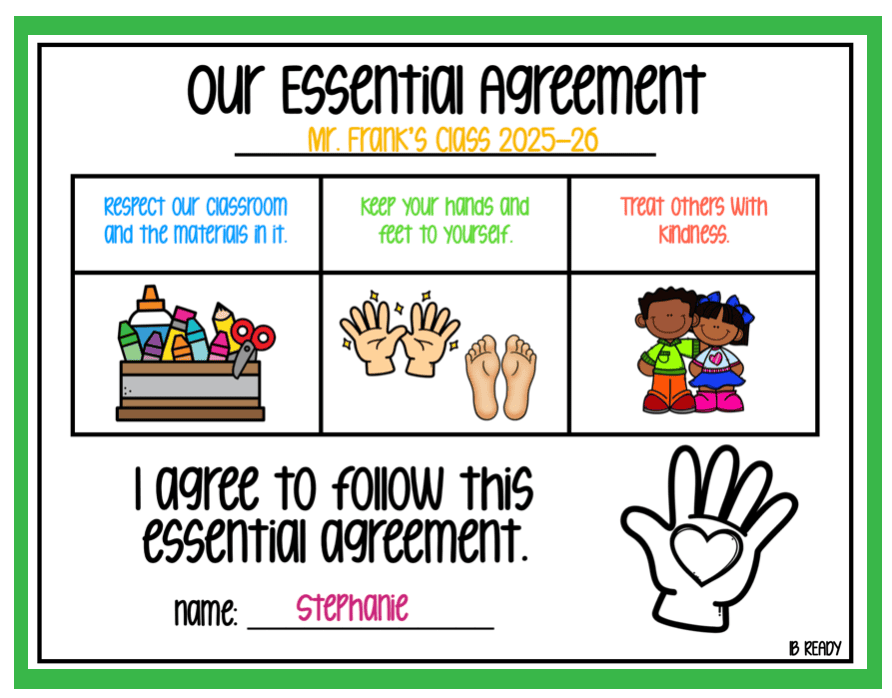
💚 Grab the Essential Agreement Template on TpT.
Final Thoughts
Creating an essential agreement isn’t about checking another item off your back-to-school to-do list.
It’s about giving students ownership from the very beginning of the school year.
When children help create the expectations, they understand them better, remember them longer, and take pride in following them because they’re no longer the teacher’s rules—they’re our agreements.
Yes, it takes a little longer than hanging a classroom rules poster on the wall. But years later, I don’t remember every essential agreement my classes created. What I do remember are the conversations we had together, the laughter while flipping pancakes, and the pride my students felt because those weren’t my classroom rules—they were our essential agreements.
I hope this process helps you create an essential agreement that truly belongs to your students.

If this is your first time visiting Boy Mama Teacher Mama, welcome!
Did you know that you can also find us on Facebook, Instagram, Pinterest, and Teachers Pay Teachers?
© Boy Mama Teacher Mama 2026
All Rights Reserved