


Handwriting House
📝 This post, Handwriting House, was originally published in 2012 and has been updated with new information and resources.
When children first begin writing, blank paper is exciting. They can draw, scribble, and proudly write letters however they can. Before long, though, they’re introduced to handwriting paper with its three familiar lines, and suddenly those letters are expected to fit into a very specific space.
For some children, those three lines are all they need. They quickly learn where to start and stop each letter. But for many young writers, those lines don’t really mean anything. They’re just…lines.
Over the years, I’ve tried lots of different songs, rhymes, and handwriting programs to teach letter formation. Some worked better than others, but the strategy my students remembered most was our Handwriting House. Instead of seeing three mysterious lines, they saw a house with a roof, a ceiling, a floor, and even a basement. Suddenly, those lines had a purpose, and letter formation began to make sense.
Why Teach Letter Formation?
Learning to form letters correctly is about much more than neat handwriting. Good letter formation helps children develop muscle memory, build confidence, and write more fluently. When students know where each letter begins and ends, they spend less time thinking about how to make a letter and more time focusing on what they want to write.
I also found that teaching letter formation consistently from the very beginning helped reduce frustration. Instead of constantly reminding students where a letter should start or stop, I could simply refer back to the Handwriting House, and they immediately understood what I meant.
Handwriting House
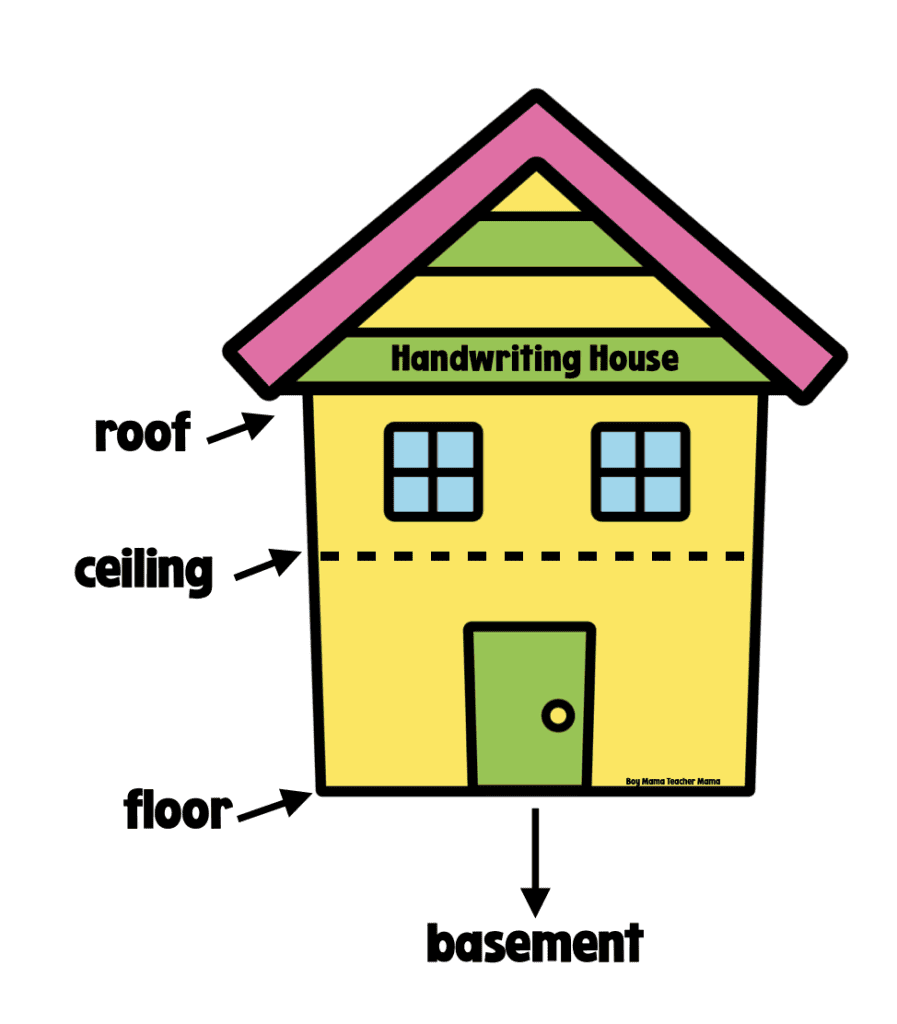
Every letter has a place to live inside the Handwriting House. Some letters stay between the floor and the ceiling. Others stretch all the way to the roof. A few adventurous letters even visit the basement! And then there are the sneaky letters—they peek just above the ceiling without reaching the roof.
I knew the Handwriting House was working when I started noticing something funny. Before they began writing, several of my students would quietly draw a tiny house at the beginning of the first line on their paper. I had never suggested it—they thought of it all by themselves! It became a visual reminder of the roof, ceiling, floor, and basement, helping them remember where every letter belonged.
Once my students started thinking about handwriting this way, it became much easier for them to remember where each letter belonged.
Introducing the Handwriting House
Before we ever picked up a pencil, we’d review our house together. We’d squat down to stand on the floor, stretch our hands up to touch the ceiling, reach as high as we could to touch the roof, and then bend down to peek into the basement. The movement helped the words stick, and before long students were using roof, ceiling, floor, and basement all on their own.
Once we had reviewed the Handwriting House, it was time to learn our new letter.
When we learned the lowercase t, I’d say:
“Today we’re going to learn the lowercase t. The t is a tall letter, so it lives all the way up to the roof. Start at the roof and draw a straight line all the way down until you reach the floor. Then pick up your pencil and cross your t right at the ceiling.”
As I told the story, I modeled the letter on the board while students practiced on their whiteboards. Before long, they weren’t just remembering how to write the letter—they were remembering where every letter lived.
Where Do the Letters Live?
Once my students understood the Handwriting House, it became easy to group letters by where they “lived.” Instead of memorizing each letter individually, they began noticing patterns. Those patterns made handwriting much easier to remember.
The Floor Rule
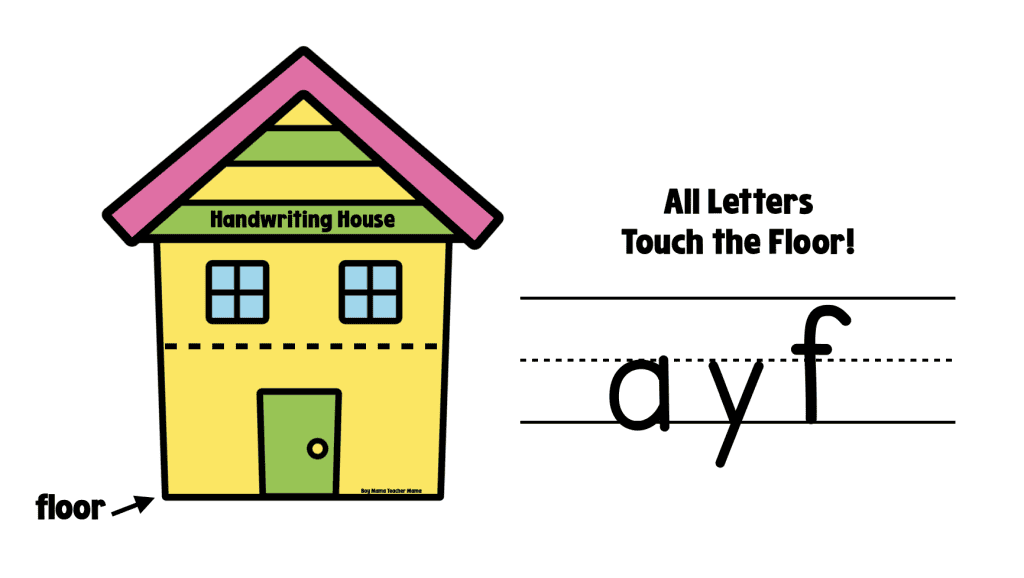
Before learning anything else, my students learned one simple rule:
Every letter touches the floor.
No matter where a letter lives, it always starts or ends on the floor. Once students understood this rule, the rest of the Handwriting House made much more sense.
Roof Letters
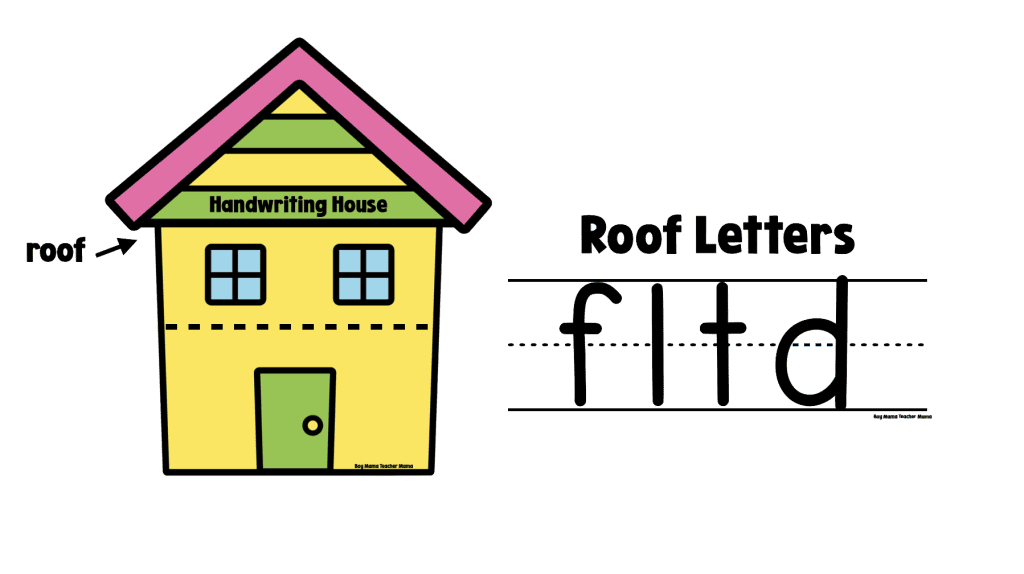
Roof letters are the tallest letters in the Handwriting House. They stretch all the way from the floor to the roof.
Ceiling Letters
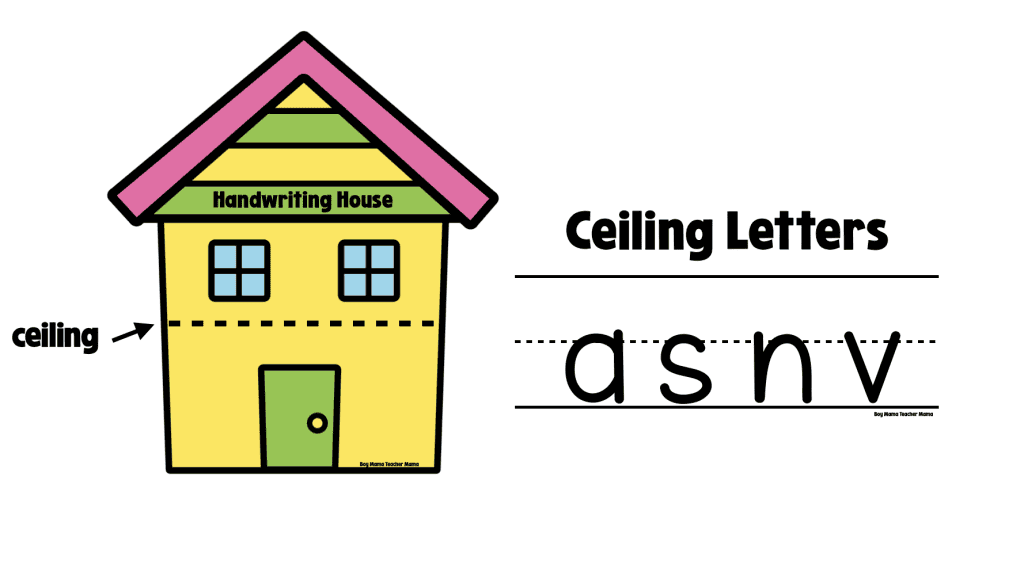
Ceiling letters stay between the floor and the ceiling. They don’t reach the roof, and they don’t go into the basement.
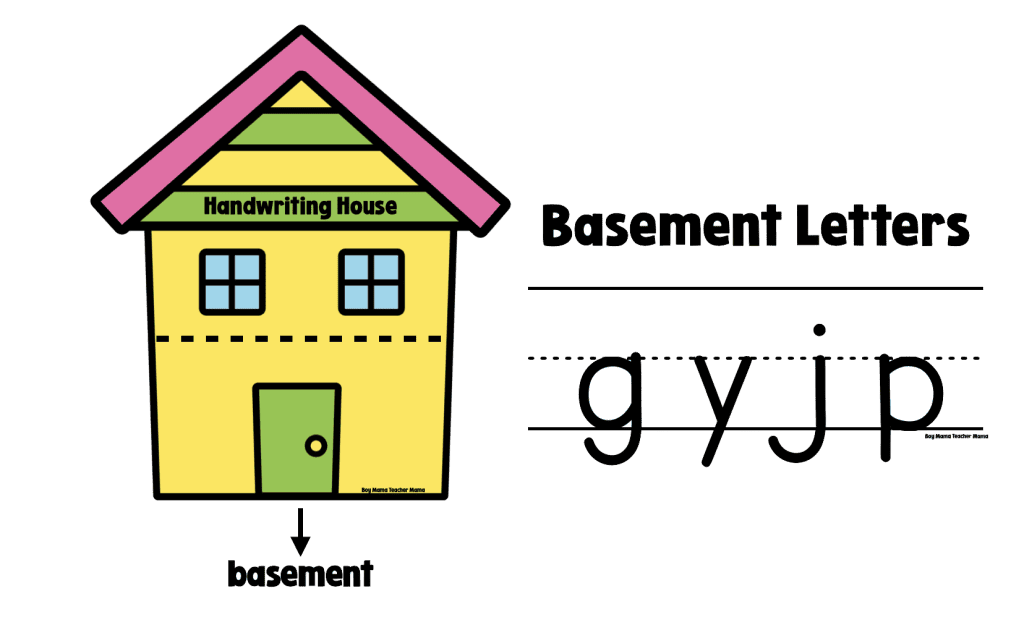
Basement Letters
Basement letters visit the basement! They begin on the floor and then extend below it into the empty space beneath the handwriting lines.
Sneaky Letters
There are only two sneaky letters—i and j. Their bodies stay between the floor and the ceiling, but their dots sneak just above the ceiling without reaching the roof. My students loved calling these the “sneaky letters,” and it made them much easier to remember.
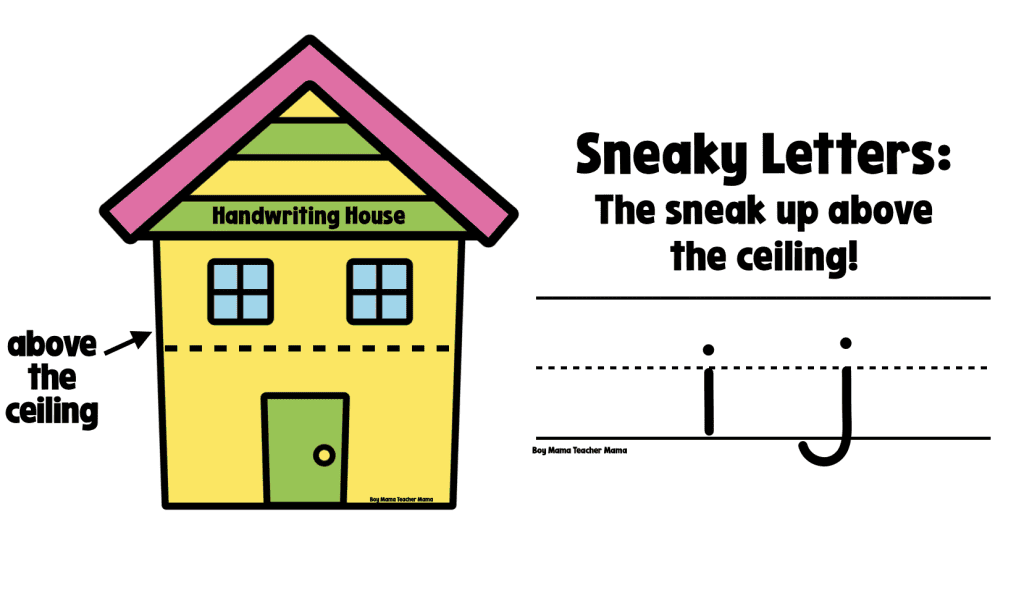
Instead of memorizing each letter individually, students began noticing patterns, making letter formation much easier to remember.
FREE Handwriting House Printables
If you’d like to use the Handwriting House in your own classroom or at home, I’ve put together a FREE printable pack to help you get started.
Inside you’ll find:
- A full-size Handwriting House poster
- Letter group reference charts
- Mini reminder cards
- Landscape and portrait versions for different classroom needs
Keep the poster near your writing center, add a mini version to student writing folders, or use the reference cards during handwriting lessons.
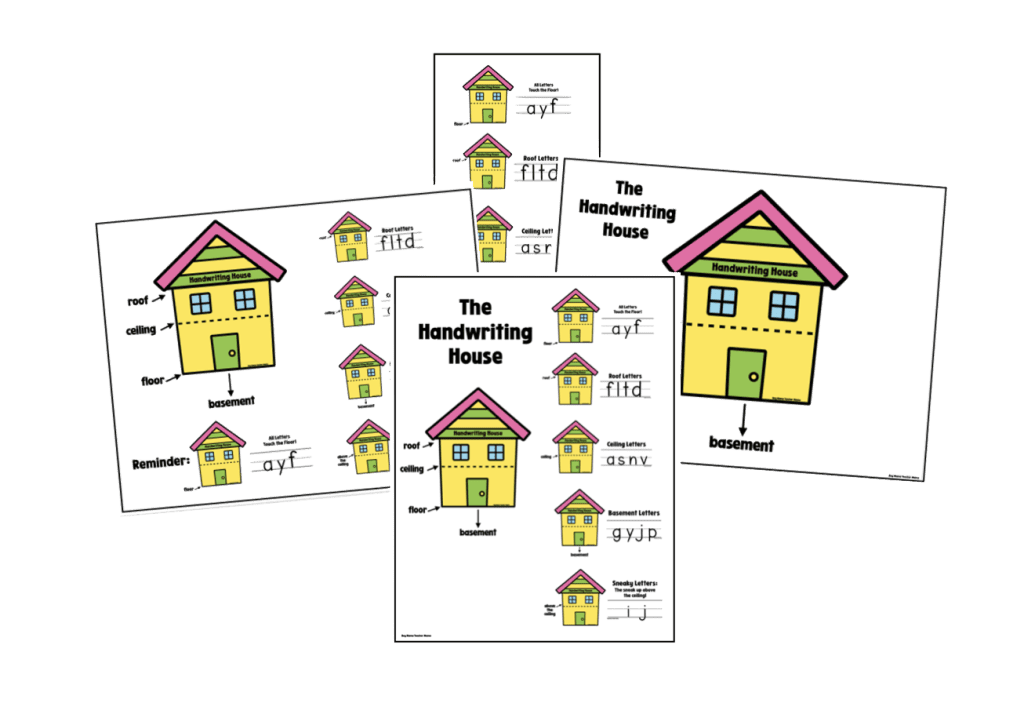
💚 Grab the FREE Handwriting House Printables here.
Wrapping Up
Teaching letter formation doesn’t have to feel complicated. Sometimes all it takes is giving children a simple way to make sense of those three little handwriting lines.
The Handwriting House gave my students a visual they could remember long after our handwriting lesson was over. Years later, I still catch myself telling children to “start at the roof” or “don’t forget the basement.” It’s a simple strategy, but one that has helped many young writers build confidence and form their letters correctly from the very beginning.
I

If this is your first time visiting Boy Mama Teacher Mama, welcome!
Did you know that you can also find us on Facebook, Instagram, Pinterest, and Teachers Pay Teachers?
© Boy Mama Teacher Mama 2026
All Rights Reserved


Pingback: Teacher Mama: Spaceman (for Writing) | Boy Mama Teacher Mama
Very helpful- I like the idea of using a story to describe the structure of the letters