
Number Bonds
Every year without fail, I would have parents coming to me one after another asking the same question — “What on earth is a number bond and how am I supposed to help my child with it?” By the end of the conversation, they were usually wondering why number bonds seemed so confusing in the first place, but I completely understand their confusion! Number bonds look much more complicated than they actually are. And they are among the most important math concepts a child will learn in the early grades.
Why I Love Teaching Number Bonds
I love teaching number bonds. They just make so much sense — and they are a jumping off point for so many more challenging math concepts down the road. If a child truly gets number bonds, they are in really good shape. If they don’t, all the math that comes next becomes so much harder.
What Are Number Bonds?
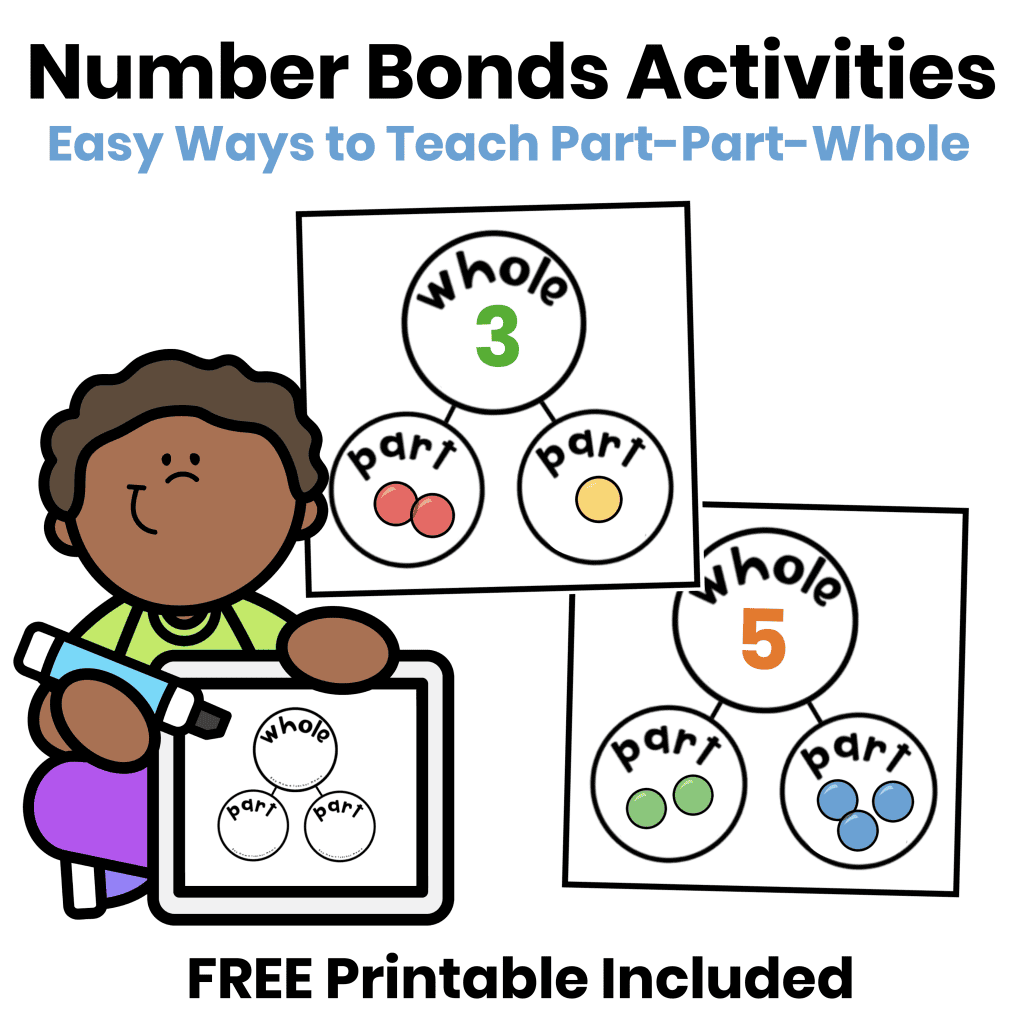
A number bond shows how a whole number can be broken into two parts. For example, if the whole is 7, the parts might be 3 and 4, or 5 and 2, or 6 and 1. Once children understand this relationship, addition and subtraction start to make so much more sense!
Why Are Number Bonds Important?
✔️ They build number sense — children begin to understand that numbers are flexible and can be broken apart in many ways.
✔️ They make addition and subtraction easier — math facts become much more intuitive once a child truly understands number bonds.
✔️ They support mental math — children who know their number bonds can solve problems quickly and confidently.
✔️ They connect to fact families — understanding number bonds makes turn-around facts and fact families so much easier later on.
Why Do Students Struggle with Number Bonds?
Many children can memorize math facts without really understanding how numbers work. Number bonds help bridge that gap by showing children that numbers can be broken apart and put back together in different ways. Once students understand that 5 can be 2 and 3, or 4 and 1, addition and subtraction begin to make much more sense.
How I Introduce Number Bonds
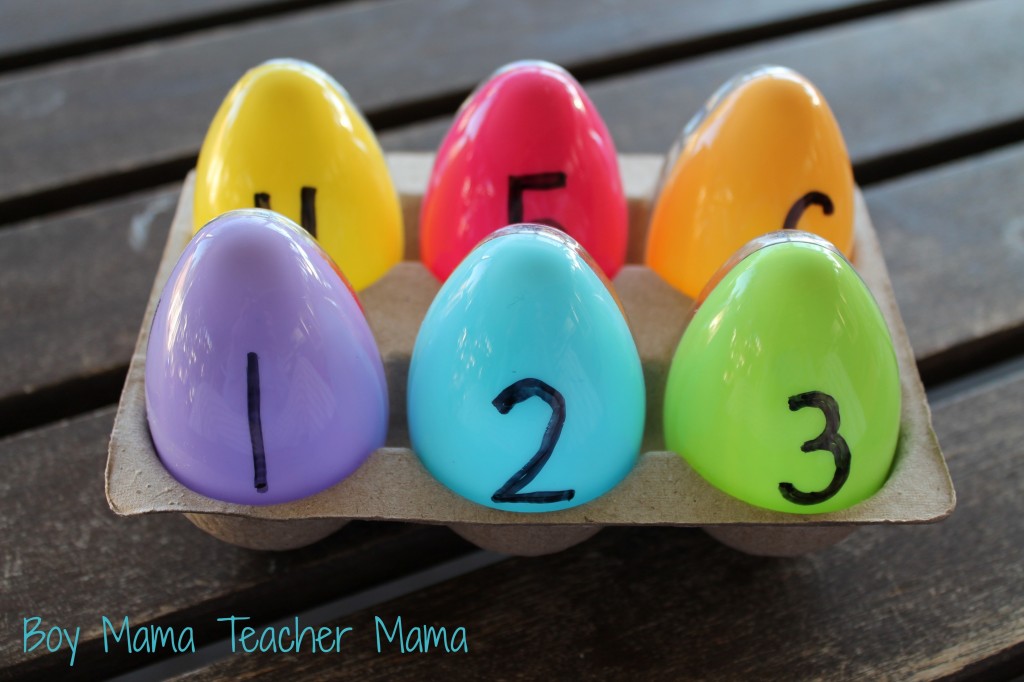
I introduce number bonds the same way every year — with plastic eggs. I know, that sounds odd! But bear with me.
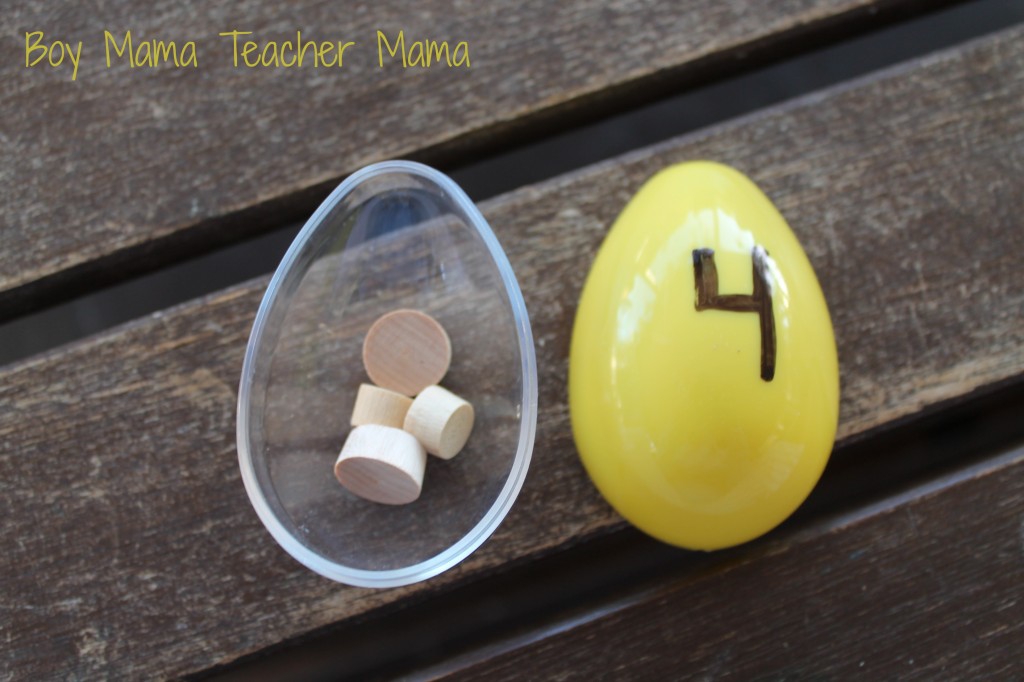
I label 6 eggs with the numbers 1 through 6 and put the corresponding number of beans inside each one. So the egg labeled 5 has 5 beans, the egg labeled 3 has 3 beans, and so on.
I gather my students and tell them we are going to learn about something called a number bond — and that a number bond is really about taking a number and breaking it apart in lots of different ways. At this point, they are usually looking at me, wondering where on earth I am going with this! 😄
I hold up an egg and tell them it has 5 beans inside and will always have 5 beans — no matter what. This is the whole number.
Then I tell them I can crack the egg and break the number into parts. I give the egg a little shake for drama, then crack it open. All 5 beans tumble out, and we count them together. I put the beans back in, give it another shake, and this time when I open it, some beans land in each half of the egg. We count the beans in each half, then count them all together — and notice that 3 beans plus 2 beans still equals 5!
The whole is always the same. Only the parts change.
We repeat this with all the numbered eggs — well before I ever show students what a number bond diagram actually looks like. By the time we get to the written form, the concept is already solid!
From Eggs to Number Bonds
Once students understand the concept through the egg activity, it is time to move to a real number bond mat! I love using seasonal erasers from the dollar spot at Target as manipulatives — kids get so excited to use them. A Halloween eraser or a little heart for February makes even the most reluctant math learner want to participate. Students physically place the manipulatives on the mat, moving them from the whole number into the two parts — just like they did with the beans in the egg!
Once students understand the concept, it is time for the fun part – games, crafts, and hands-on practice!

Number Bond Crafts and Games
Number Bond Craft: Make Your Own Moveable Number Bond
One of my favorite ways to introduce number bonds is with a hands-on craft that lets kids create their own moveable, reusable number bond. This is such a powerful way to make the concept concrete before moving into games and written practice. All it takes is some popsicle sticks, a brad fastener, and some paper, and you have an interactive number bond you can use over and over. It is also really helpful when introducing turnaround facts and fact families.
Kids love having their own number bond they can manipulate — and it makes a great tool to keep at their desks or math centers!
💚Grab the Number Bond Craft

Number Bond Card Game
Once kids have a solid understanding of what number bonds are, this card game is the perfect way to practice! Here is how to play:
Place the game board on the table and shuffle the cards. Place them face down in a pile.
✔️ Take the top card from the pile and place it in the top circle — this is the “whole” that players will be trying to make.
✔️ The first player draws a card. If it can be used as one of the parts, they place it in one of the “part” spaces. If it cannot be used, they discard it.
✔️ The next player draws a card and looks for the number that will complete the number bond.
✔️ When the number bond is complete, the player who played the final card takes all three cards, and the game begins again!
Other Ways to Play
✔️Give each player five cards to start. They take a card from the pile and place it in the “whole” number space on the number bond. Players then use their cards to try to complete the number bond. If no cards can be played, swap with the cards in the pile.
✔️Instead of starting with the whole number- start with a part and pick cards to complete the number bond- backward!

💚 Grab the Number Bond Card Game
Number Bond Games: Compose and Decompose Numbers
💡This game can also be played with manipulatives for students who need more support. Put the whole number in the top space of the number bond. For example, if the whole number on the card is 5, students take 5 beans, cubes, or pennies and place them there. They then physically separate and move the manipulatives down into the number bonds two parts to complete the number bond. Great for visual and hands-on learners!
Looking for even more number bond practice? This set of number bond games covers composing and decomposing numbers from 0-10 and 0-20 — perfect for differentiation in the classroom or at home!
💚Grab the Number Bond Games

Free Roll and Create Number Bonds Printable
Want to try a free number bond activity before you buy? Grab this free Roll and Create Number Bonds printable and give it a try with your students or kids at home!
💚Grab the Free Roll and Create Number Bonds Printable

Number bonds may seem simple, but they are one of the most powerful math tools we can give young learners.

If this is your first time visiting Boy Mama Teacher Mama, welcome!
Did you know that you can also find us on Facebook, Instagram, Pinterest, and Teachers Pay Teachers?
© Boy Mama Teacher Mama 2026
All Rights Reserved