

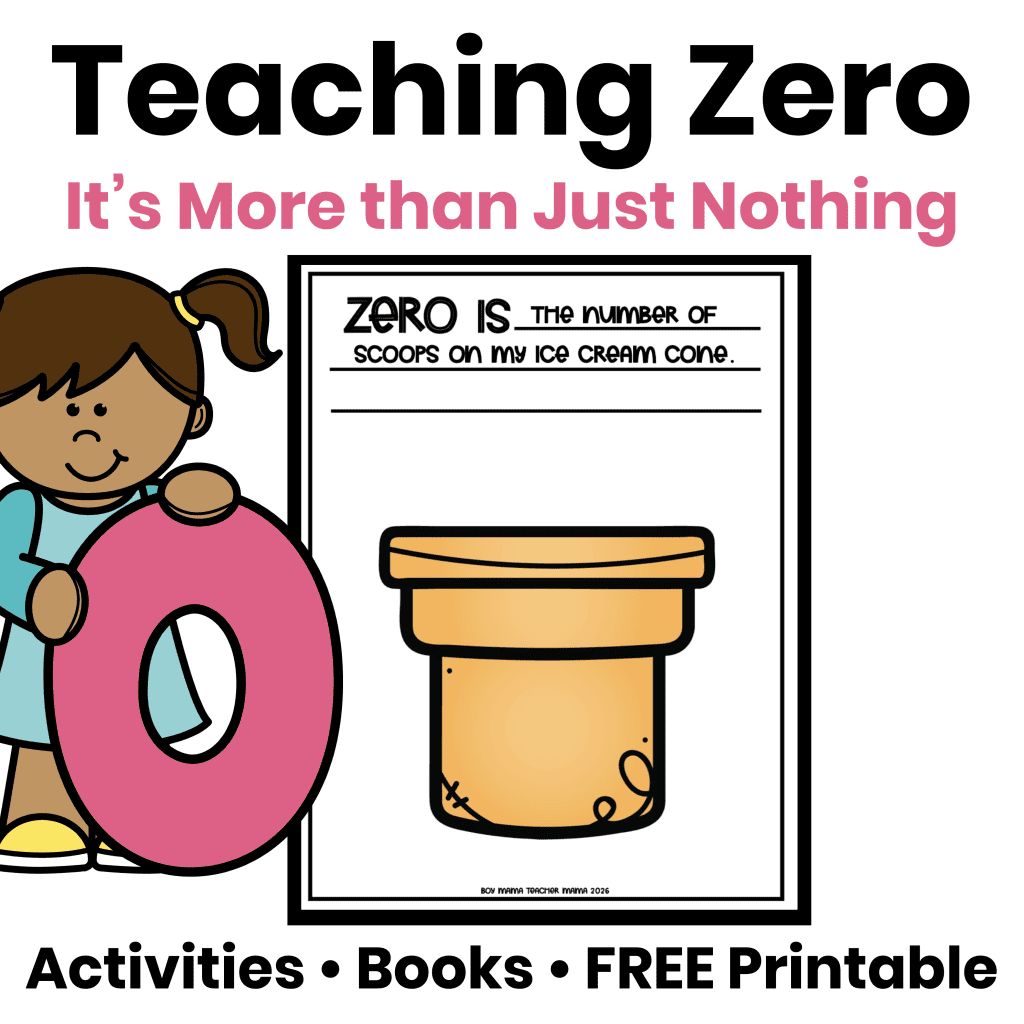
Teaching Zero
Teaching zero to young children seems a little funny when you think about it. Young children already understand the idea of nothing. If there are no cookies left, they know there are none. If there are no toys in the box, they know it’s empty. The idea of nothing isn’t particularly difficult.
But understanding zero as a number is a whole different story.
Students need to learn how zero works in addition and subtraction, what it means when zero appears in an equation, and eventually, the very important role zero plays in place value. Think about it—a child learns that zero means “nothing,” and then we put a zero after a 1 and suddenly 1 becomes 10! That’s a pretty big job for a number that supposedly means nothing.
Zero is actually a pretty powerful number, and explicitly teaching students how it works gives them a foundation they’ll use as their math skills grow.
What Does Zero Really Mean?
At its most basic, zero tells us that there aren’t any. If there are five apples and we take all five away, there are zero apples left. If there are no crayons in the box, the box has zero crayons.
Children usually understand this idea long before they understand the numeral 0 or how zero is used in math. We use words like none, nothing, empty, and all gone in everyday conversation to describe the same basic idea.
This is a great place to start when introducing zero. Talk about situations students already understand and connect that familiar idea of nothing there to the numeral 0.
You can ask simple questions such as:
How many elephants are in our classroom? Zero!
How many cookies are left after we eat them all? Zero!
How many students are wearing ten shoes? Zero!
Then show the numeral 0 and make the connection: Zero is the number we use to represent a quantity of none.
Zero, None, and Nothing
We use the words zero, none, and nothing all the time, and young children usually understand what they mean. But they may not make the connection between those words and the number zero. They know they don’t want a bowl of ice cream with nothing in it, and they definitely don’t want to open a box of donuts and find none left!
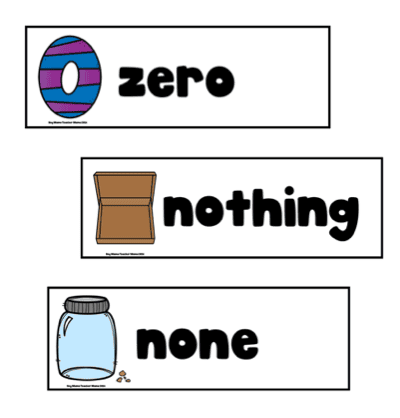
Use familiar examples like these to get students talking about what zero, none, and nothing mean. Then have them think of their own examples. What would they definitely NOT want zero of? What would they be disappointed to find none of? When might they open something and find nothing inside?
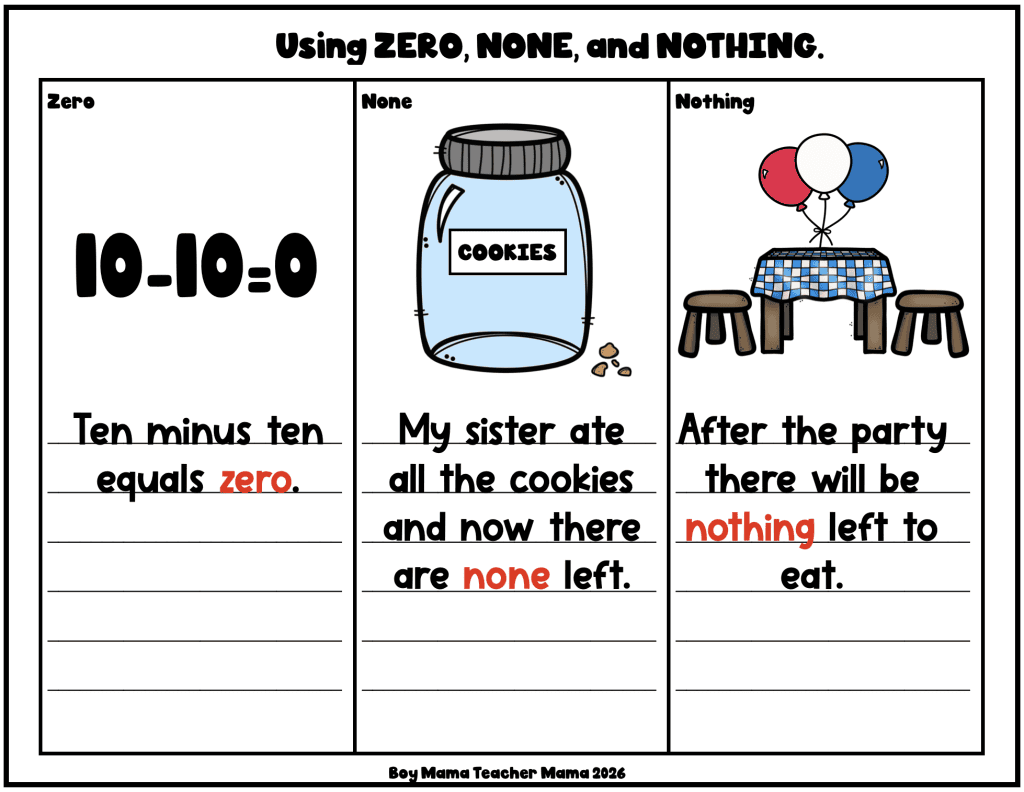
From there, students can draw and write their own examples of zero, none, and nothing. It’s a simple way to connect words they already know to the mathematical idea of zero.
What Happens When We Add and Subtract Zero?
Once students understand what zero represents, they can begin exploring what happens when we use it in addition and subtraction. This is where things can get a little tricky!
When we add zero to a number, the number stays the same:
5 + 0 = 5
When we subtract zero, the number also stays the same:
5 − 0 = 5
But when we take away everything we have, we’re left with zero:
5 − 5 = 0
That last distinction is an important one for young students. Taking away zero and taking away all sound similar when you’re first learning, but they have very different results.
Try acting these out with counters or other small objects. Put 5 counters on the table and add none. What happened? Put 5 counters down and take none away. What happened this time? Finally, start with 5 and take all 5 away. Now what’s left?
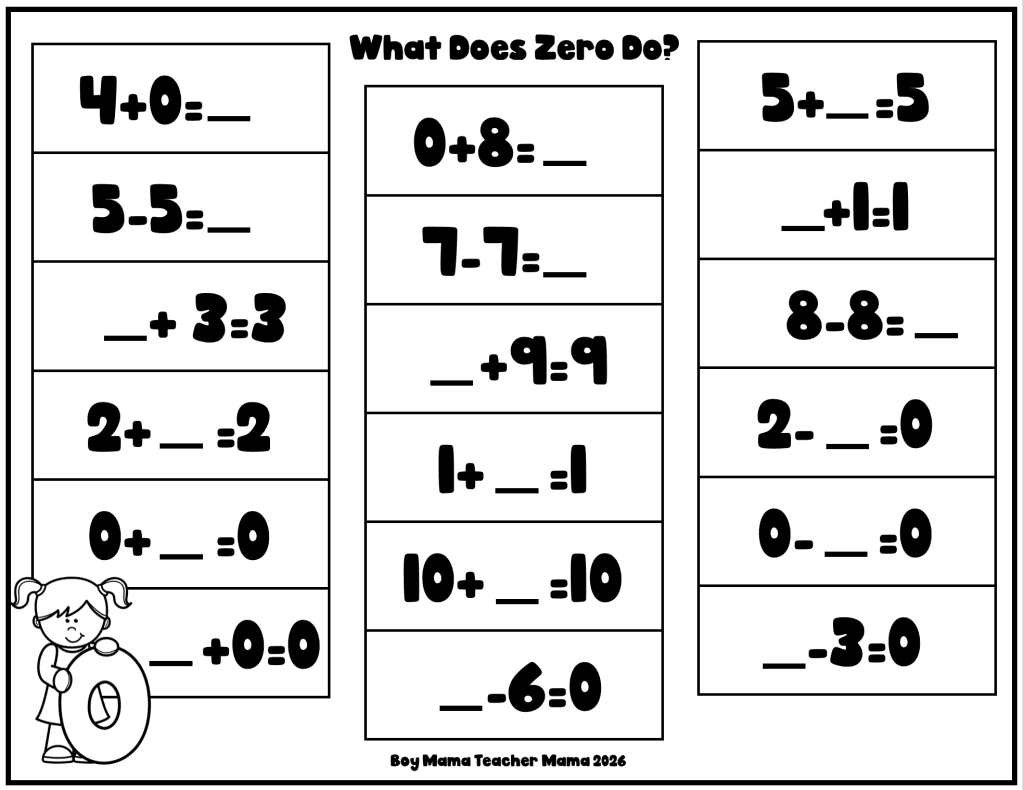
Giving students a chance to actually move the objects makes it much easier to see what zero is doing in each equation.
Using Zero in Number Stories
Number stories are a great way to help students see what zero actually looks like in math. Instead of simply solving 4 − 4 = 0, put the equation into a situation they can picture.
There were 4 donuts in the box. We ate all 4 donuts. How many donuts are left?
4 − 4 = 0
Or turn the situation around to show what happens when we subtract zero:
There were 5 books on the shelf. No one took any books away. How many books are still on the shelf?
5 − 0 = 5
Once students are comfortable with these examples, have them create their own number stories using zero. They can draw a picture, write the equation, and then write a story to match.
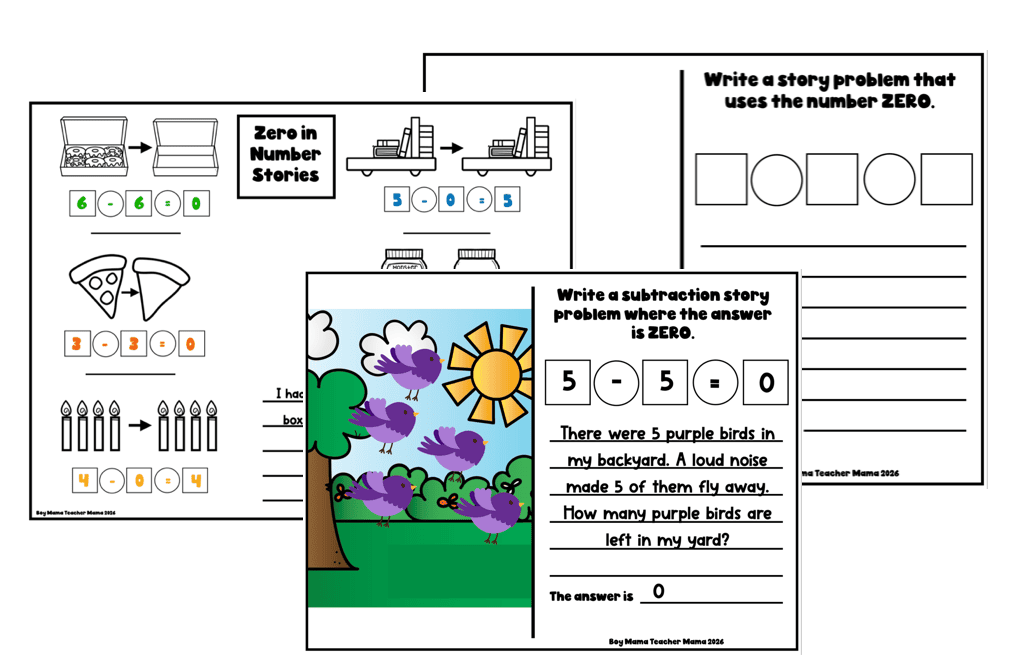
I especially like giving students the freedom to decide where zero belongs in their story. It doesn’t always have to be the answer! They might create a story for 6 − 6 = 0, 6 − 0 = 6, or even 0 + 6 = 6.
Understanding Zero Math Activities
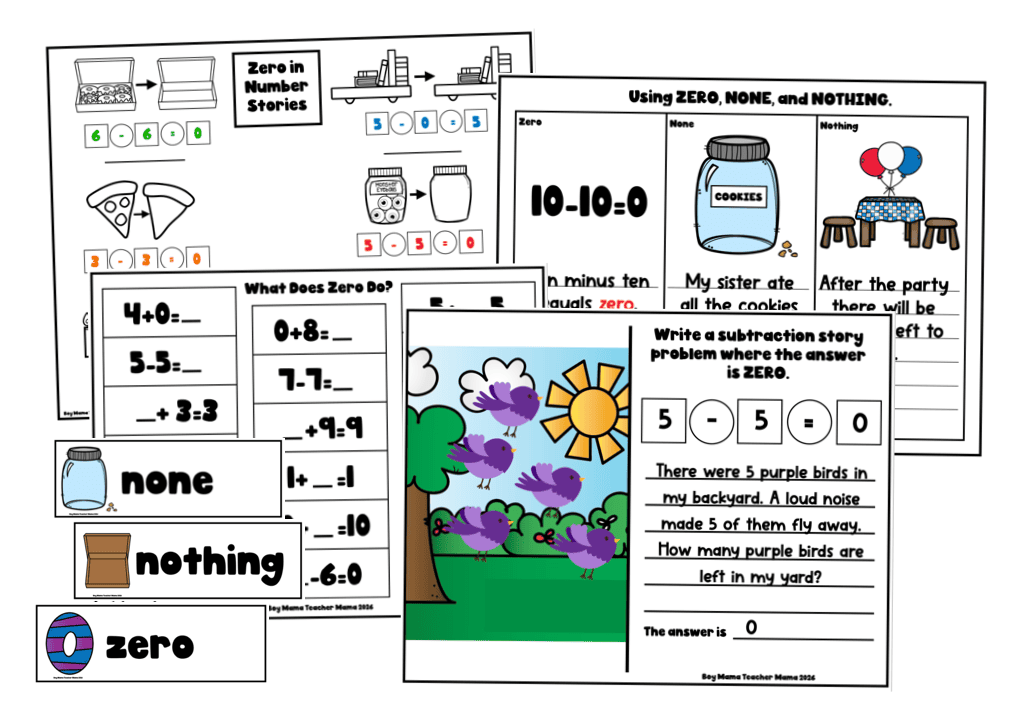
If you’re looking for more ways to explore zero with your students, I put these ideas together in my Understanding Zero Math Activities resource.
Students work with zero, none, and nothing, explore what happens when zero is used in addition and subtraction, solve missing-number equations, and create and solve number stories using zero.
The activities can be used together when introducing zero or individually for extra practice during math centers, small groups, morning work, or independent work.
💚 See the Understanding Zero Math Activities on TpT
Teaching Zero Through Books
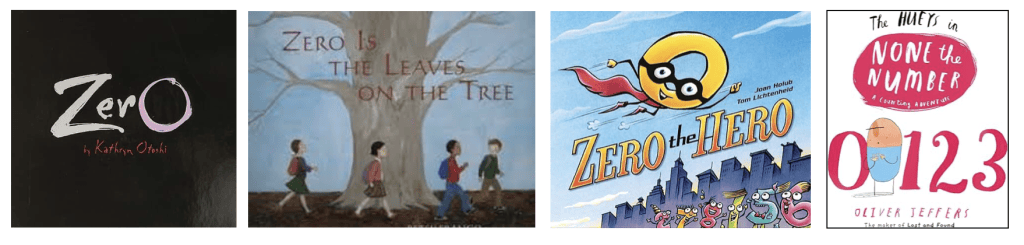
Books are another fun way to get students thinking and talking about zero. These are a few that approach the idea of zero in very different ways.
Zero by Kathryn Otoshi
Zero feels like she doesn’t count—literally. As she watches the other numbers, she wishes she could be more like them until she begins to understand her own value. This is a sweet story for talking about both the number zero and the idea that everyone has value.
Zero the Hero by Joan Holub
The other numbers aren’t too impressed with Zero, but he eventually gets a chance to show just how important he can be. This one is especially fun for exploring what happens when we use zero in different math operations and why zero isn’t quite as useless as the other numbers think!
Zero Is the Leaves on a Tree by Betsy Franco
This book looks at all the places we can find zero in the world around us—an empty tree, an empty nest, or zero boats on the lake. It pairs perfectly with asking students to come up with their own real-life examples of zero, none, and nothing.
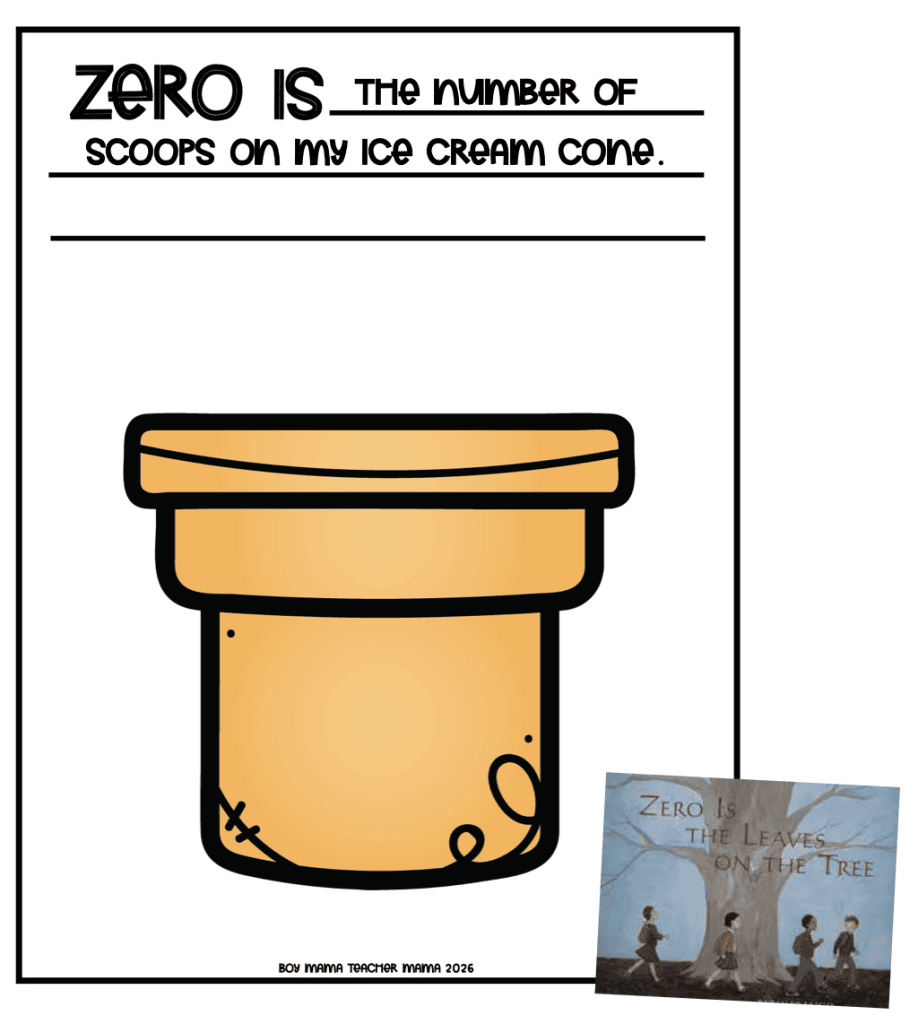
💚 Grab the FREE Zero Writing Activity for Your Students
None the Number by Oliver Jeffers
Can none really be a number? The Hueys tackle that question in their wonderfully silly way. This is a fun one for starting a conversation about what zero means and whether “none” and zero are really the same thing.
Understanding the Power of Zero
Zero may represent nothing, but it certainly isn’t an unimportant number! Helping students understand how zero works gives them a foundation they’ll continue to use as they move into addition, subtraction, place value, and beyond.

If this is your first time visiting Boy Mama Teacher Mama, welcome!
Did you know that you can also find us on Facebook, Instagram, Pinterest, and Teachers Pay Teachers?
© Boy Mama Teacher Mama 2026
All Rights Reserved


