
How I Learn Best Glyph
At the beginning of each school year, before we jump into academics, I like to give my students a chance for some student self-reflection and to think about themselves as learners. What do they already know about how they learn best? What helps them focus? What makes learning easier or more enjoyable for them?
Over the years, I’ve used all sorts of activities to get students thinking about these questions. This year, I decided to create something a little different and combined student self-reflection with a glyph. Glyphs are hands-on, fun to create, and a simple way for students to share a lot of information about themselves without it feeling like work!
I had some very specific goals in mind with this activity. I wanted to learn about each student from their perspective—not from their former teachers or even their parents. I wanted to know what kind of environment worked best for them. Did they prefer silence, a little noise, or music? Did they like the lights on or off? Did they prefer working with a partner or alone?
I also wanted to know about their frustration tolerance, who they felt most comfortable asking for help at school, and whether they thought they learned better by seeing something or hearing it.
I realize these are young students and some of these are pretty big ideas, but you might be surprised by just how much they can tell you about themselves and how they learn.
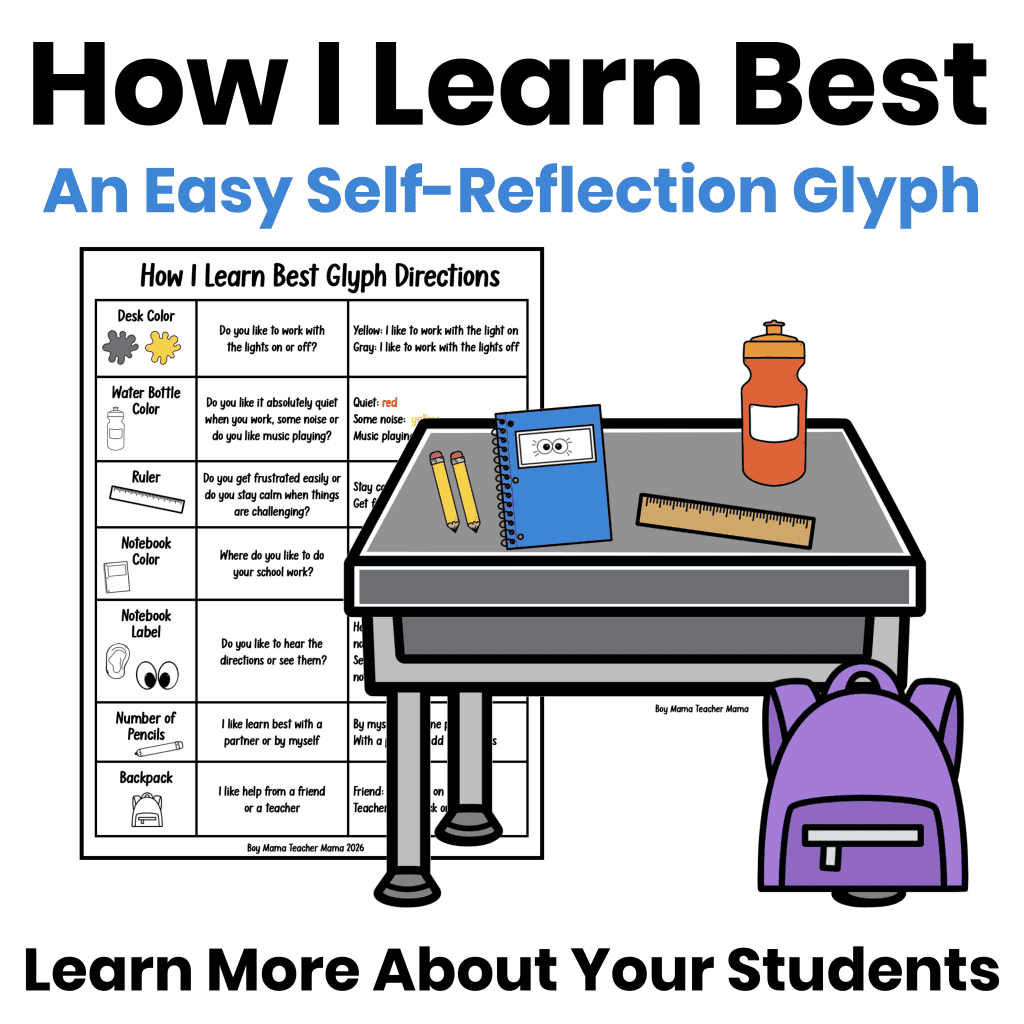
With those questions in mind, I created the How I Learn Best Glyph. If I were heading back into my own classroom this year, this is the kind of activity I would want to use during those first few days of school. It gives students a simple, hands-on way to think about themselves as learners while giving teachers a glimpse into how each child sees themselves.
Completing the Glyph
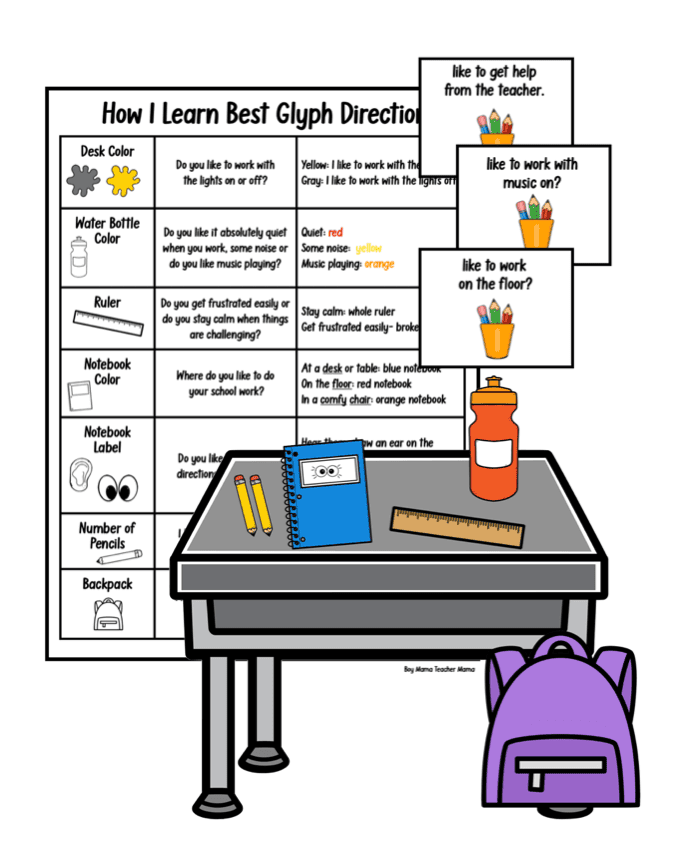
Students begin with a basic template and use the glyph directions to make choices based on their own learning preferences. Each choice changes a part of the glyph, so when it’s finished, it becomes a visual representation of how that student sees themselves as a learner.
Here is an example of a completed How I Learn Best Glyph:
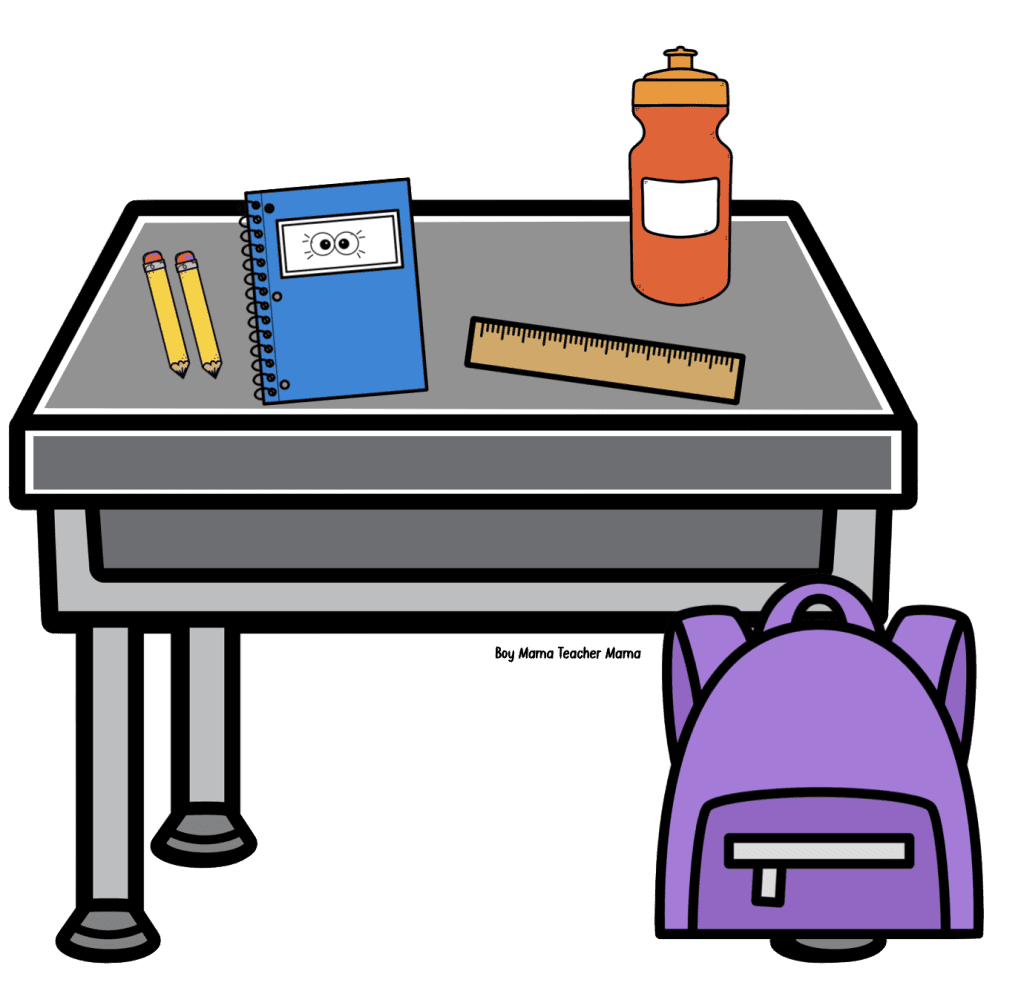
So what does this glyph tell us about this student? Each part of the picture represents an answer to one of the questions. In this example, the two pencils on the desk tell us that this student prefers to work with a partner rather than alone. The orange water bottle tells us that this student likes to listen to music while working, and the purple backpack tells us that this student prefers to get help from a teacher instead of a friend.
When the glyphs are complete, the teacher has a lot of useful information about each student. Information that might normally take weeks to learn is gathered in one simple activity. The glyphs can even be used again at the end of the school year, giving students a chance to reflect on themselves as learners and see how they have grown.
Using the Glyphs as a Class
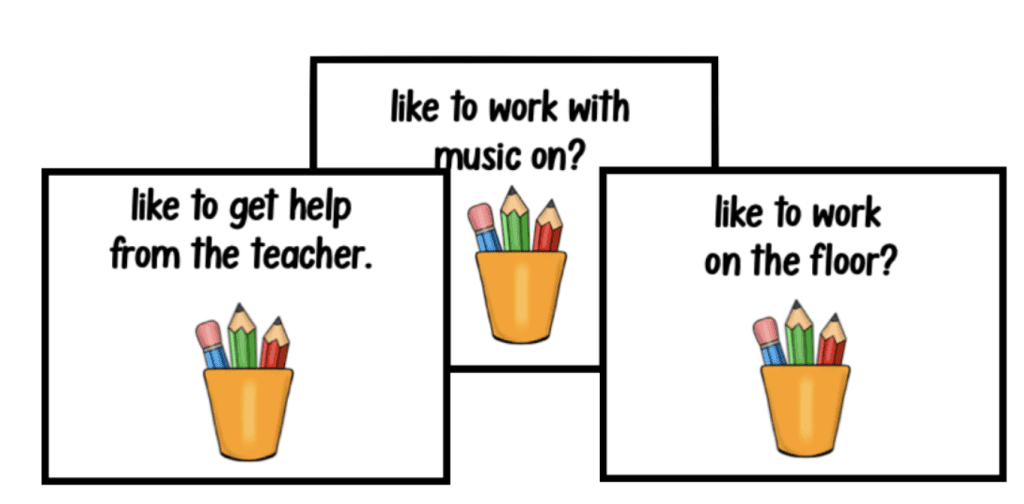
After students complete their glyphs, bring the class together to talk about what they discovered. The included question cards can be used to compare answers and find similarities and differences among students. You might discover that half the class prefers a quiet room while others like a little background noise, or that some students would rather ask a friend for help while others feel more comfortable going to the teacher.
These conversations are also a great way for students to see that everyone learns and works a little differently—and that’s okay. There isn’t a right or wrong way to complete the glyph.
Turn the Glyphs into a Class Display
Because every finished glyph will look different, they would make a fun beginning-of-the-year bulletin board or classroom display. And unlike a typical back-to-school display, the glyphs actually tell you something about the students who created them.
Grab the How I Learn Best Glyph
Ready to learn a little more about how your students see themselves as learners? The How I Learn Best Glyph includes everything you need to get started, including glyph directions, student templates, and question cards to use for class discussions and comparisons.

If this is your first time visiting Boy Mama Teacher Mama, welcome!
Did you know that you can also find us on Facebook, Instagram, Pinterest, and Teachers Pay Teachers?
© Boy Mama Teacher Mama 2026
All Rights Reserved