


Hands-On Activities for Teaching Time
📝 This post Teaching Time, was originally published in 2013 and has been updated with new information and resources.
Telling time is one of those skills that seems simple—until you’re the one teaching it! Numbers, two hands moving at different speeds, and counting by both 1s and 5s all share the same clo
That’s why I love teaching time with hands-on activities. When children build a giant clock, become the hour and minute hands, and physically move around a clock face, telling time stops being an abstract concept and becomes something they can see, touch, and experience.
If you’re just getting started, be sure to check out my posts on teaching with an analog clock and making a digital teaching clock first. Those activities build a strong foundation before moving on to the games below. Once you’re ready, come back here for movement-based activities that are perfect for the classroom, homeschool, math centers, or even a rainy afternoon at home.
Why Hands-On Activities Work
Young children learn best when they can move, manipulate materials, and actively participate in the lesson. Instead of simply looking at a picture of a clock in a workbook, these activities allow children to become part of the clock itself.
As students hop to numbers, wear the hour and minute hands, and build a giant clock together, they’re strengthening their understanding of how clocks work while having fun.
Skills Students Practice
✏️ Reading analog clocks
✏️ Identifying the hour and minute hands
✏️ Counting by fives
✏️ Understanding how the hands move
✏️ Telling time to the hour, half hour, quarter hour, and beyond
✏️ Building math vocabulary
✏️ Gross motor movement
Make a Giant Clock
One day I wanted a hands-on way to help my son understand how an analog clock works. Sitting at the table looking at a small clock just wasn’t clicking, so I decided to make one big enough for him to stand on and move around.
It turned out to be one of our favorite ways to practice telling time!
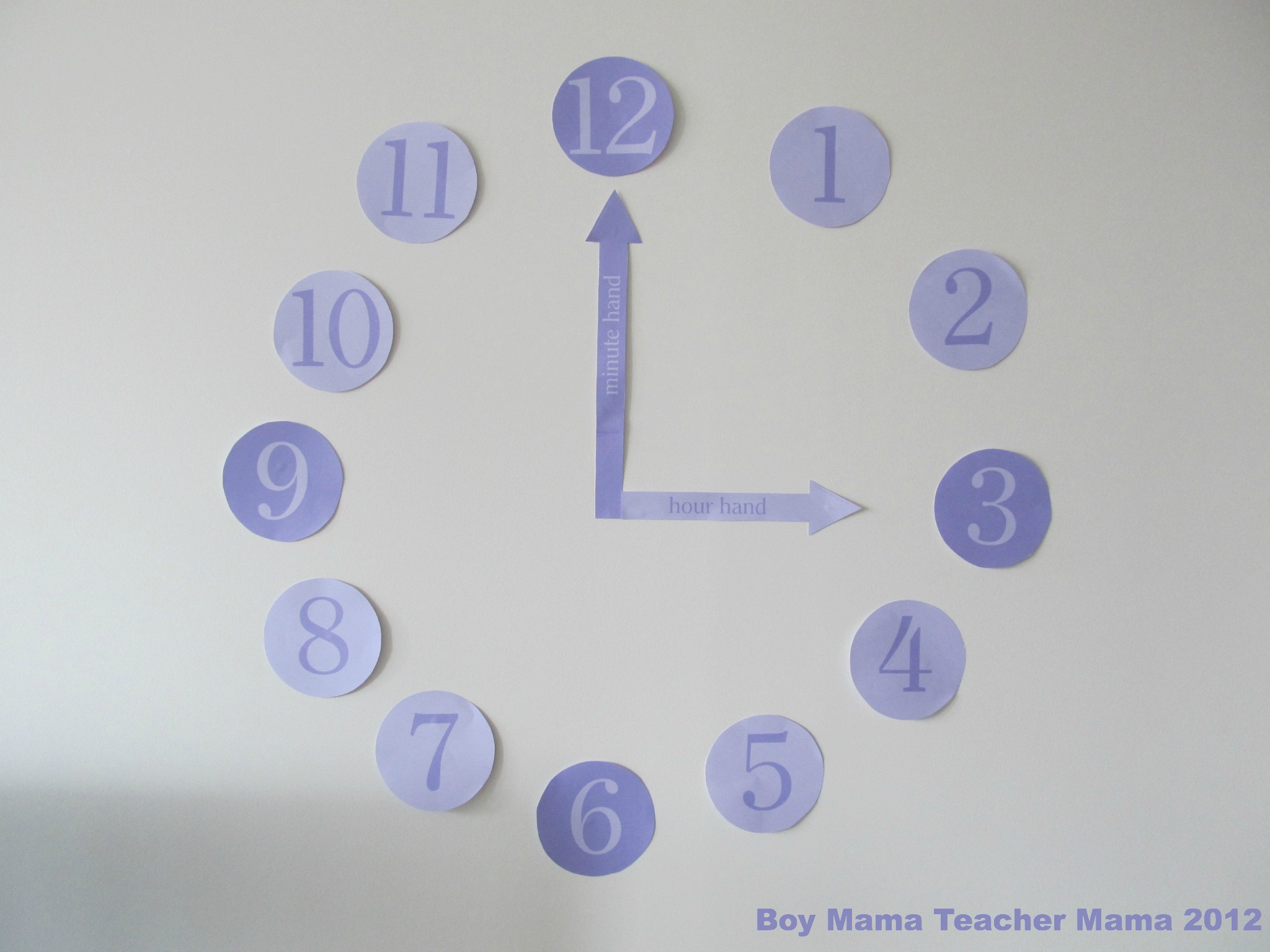
I designed giant numbers and clock hands that could be printed, cut apart, and arranged on the floor. The clock hands are glued together to whatever length works best for your space. I recommend printing everything on cardstock or gluing the pieces onto tagboard so they’ll hold up through lots of games.
What You’ll Need
✔️ Print the FREE clock numbers and hands.
✔️ Cut out the templates.
✔️ Glue the clock hands together.
✔️ Print on cardstock or mount to tagboard for extra durability.
Make the Hand Hats
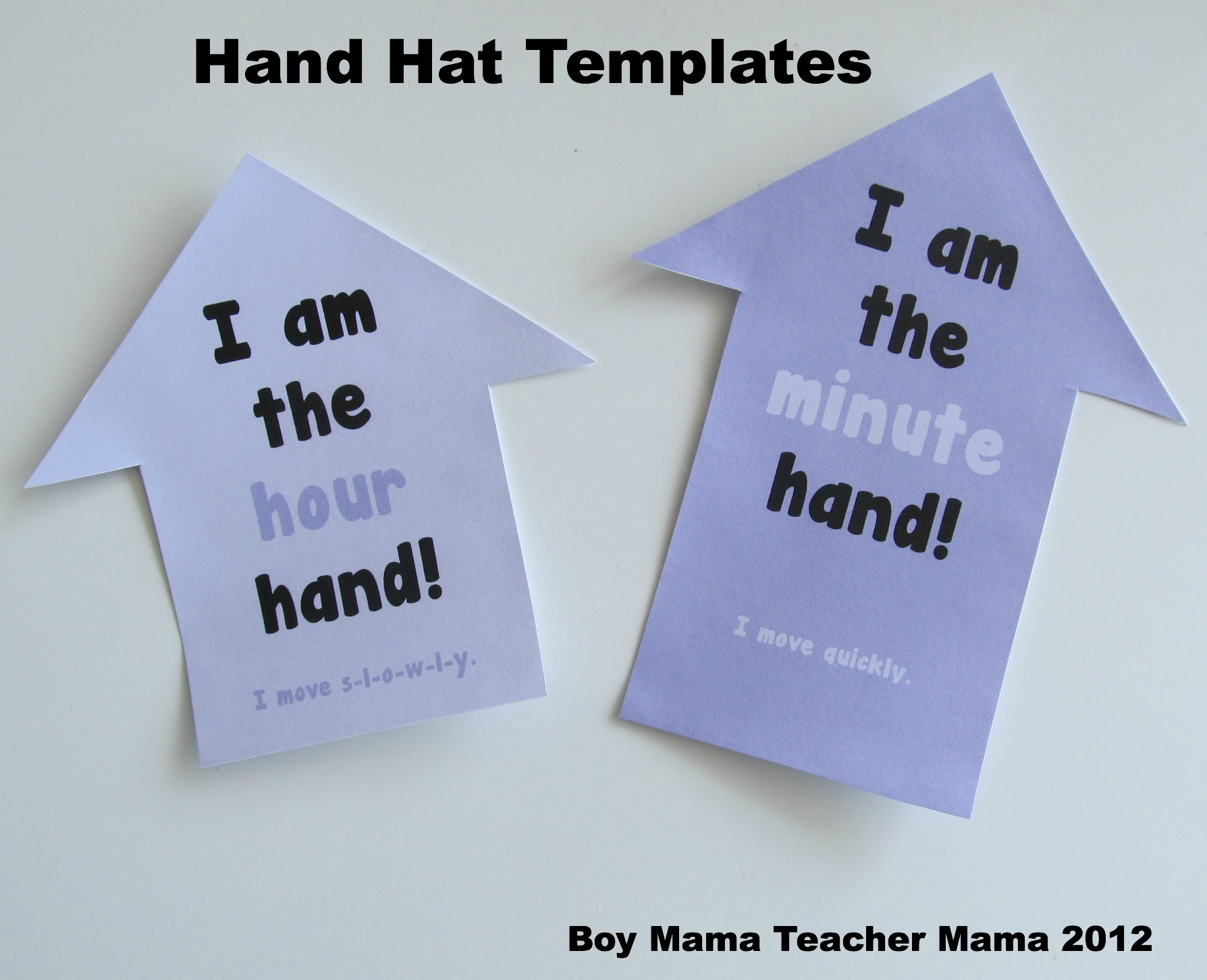
Print the hour and minute hand templates then attach each one to a hat or headband.
Now you’re ready to play!
Clock Building Games
Create a Clock Face
Scatter the clock pieces around the room and work together to build a giant clock face. For an extra challenge, set a timer and see how quickly it can be completed.
Clock Face Mix-Up
Build a clock face, but intentionally place several numbers in the wrong spots. Challenge children to find the mistakes and move each number to its correct position.
Missing Parts
Create a clock face but leave out several numbers. Can your child or students figure out which numbers are missing and where they belong? Once they’ve guessed, hand them the missing numbers and let them complete the clock.
Learn the Hour and Minute Hands
One of the biggest challenges for young learners is remembering the difference between the hour hand and the minute hand. These movement activities help children remember that the hour hand is shorter and moves more slowly, while the minute hand is longer and moves much more quickly around the clock.
Who Is Taller?
The minute hand is taller!
Have children stretch up high to become the minute hand and squat down low to become the hour hand.
💡 Is the hour hand more like a tree or a bush?
💡 Is the minute hand more like a skyscraper or a house?
Who Is Faster?
The minute hand moves much faster than the hour hand.
March quickly to become the minute hand.
March slowly to become the hour hand.
💡 Is the hour hand like a snail or a rabbit?
💡 Is the minute hand like a train or a bicycle?
Move Like the Hand
Call out “Hour!” or “Minute!”
Children move slowly for the hour hand and quickly for the minute hand.
Stand Like the Hand
Call out “Hour!” or “Minute!”
Children stretch tall for the minute hand and squat low for the hour hand.
Hour Hand Games
Have children wear the Hour Hand Hat for these activities.
Hour Hop
Place the minute hand on the 12 and leave it there throughout the game.
Call out an o’clock time (4:00, 8:00, 11:00, etc.) and have children hop to the correct number on the giant clock.
Hop Around
Beginning at 12:00, have children hop around the clock while saying different times like 12:00 and 2:00 and work your way all the way around the clock.
This is a simple way to reinforce the relationship between the hour hand and the numbers on the clock.
Minute Hand Games
Have children wear the Minute Hand Hat for these activities.
Hop Around by 5s
Just like the Hour Hop game, have children hop around the clock—but this time count by fives. 5…10…15…20… Continue all the way around the clock until you reach 60. Start over again, and be sure kids understand that you start over after 60!
This is a great way to reinforce skip counting while helping students understand how the minute hand moves around the clock.
Half Past & Quarter Hour Hop
When children are ready for a challenge, keep the giant clock on the floor and practice more advanced time concepts.
You control the hour hand while students move the minute hand to the correct location.
Call out:
💡 Half past ___
💡 ___ :30
💡 Quarter past ___
💡 ___ :15
💡 Quarter to ___
💡 ___ :45
These games help students see how the hour and minute hands work together instead of thinking about them separately.
Ready for More Teaching Time Ideas?
Once children understand how the hands move around the clock, they’re ready for games that provide repeated practice reading and telling time. These are some of my favorite classroom resources for reinforcing those skills.
Four Teaching Time Games
My students had just finished our telling time unit, and I realized I didn’t have enough hands-on games for math centers. So I created my own! The games cover time to the hour, half hour, quarter hour, and five-minute intervals, giving students plenty of practice as their skills grow.
All four games are played exactly the same way, making them easy for students to learn and easy for teachers to prep. Simply print the templates, cut apart the cards, and you’re ready to play!
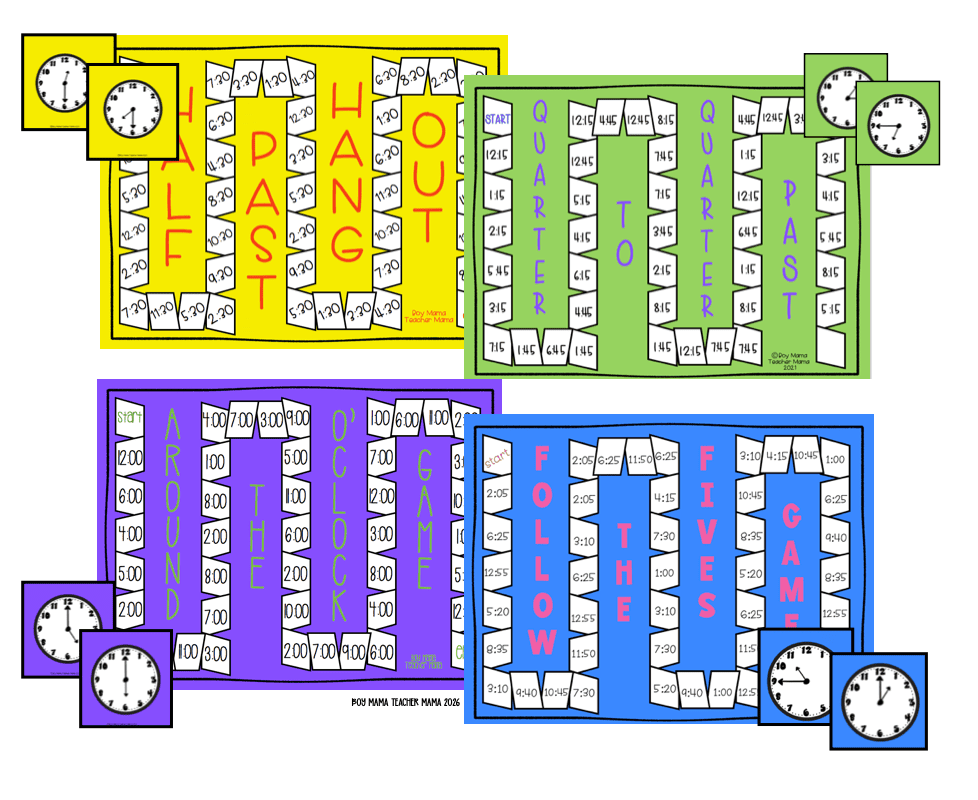
💚 Grab Telling Time Games on TpT
Teaching Time Bingo
Once students have practiced with a giant clock and some card games, Bingo is a fun way to bring everything together.
Students create their own bingo boards by cutting out and gluing clock faces for the time-telling skill you choose—hour, half hour, quarter hour, or a mix of all three. Then, play just like traditional Bingo: the caller draws a clock face card, calls out the time, and players cover the matching clock on their boards until someone gets Bingo—or even Blackout!
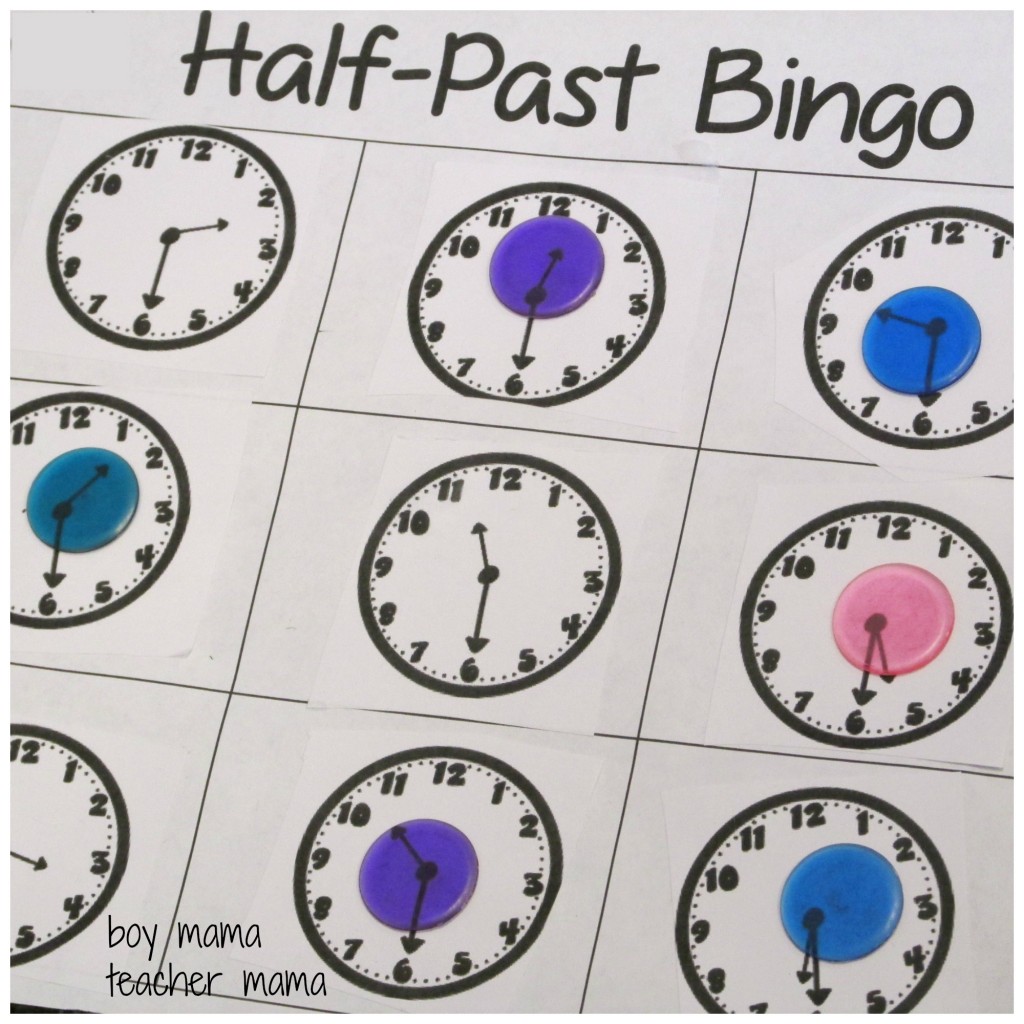
💚 Grab Telling Time Bingo on TpT
Even More Time-Telling Practice
If you’re looking for even more ways to help children master telling time, these resources are great companions to the activities above. Just click the title to see more!
⏰ FREE O’Clock Cards and Games
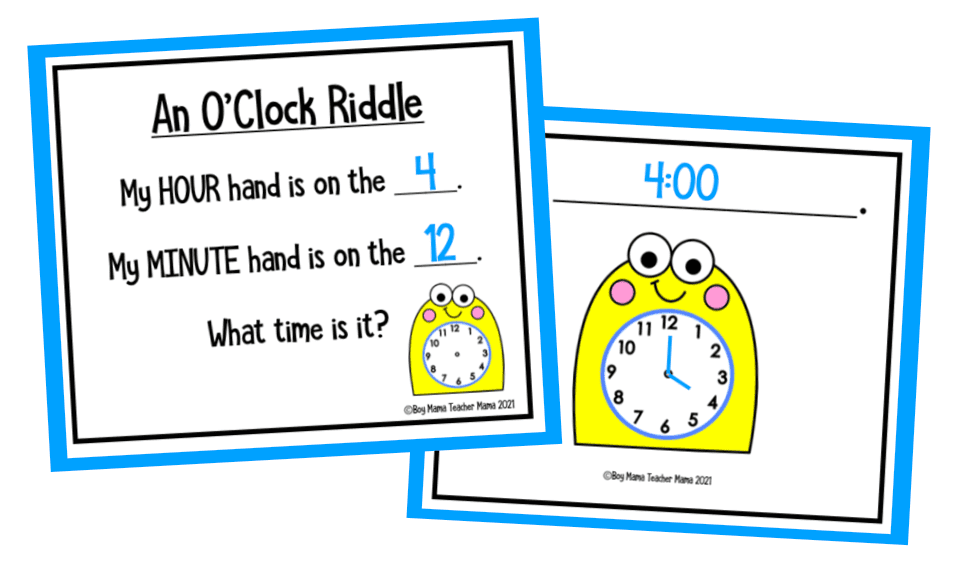
⏰ Analog Clock Riddles
⏰ UPDATED Time to the Hour Memory Game
⏰ Time to the Half Hour Memory Game
Teaching Time Can Be Fun!
Telling time doesn’t have to be all worksheets and drills. In fact, some of the best learning happens when children are up, moving, talking, and actively exploring how a clock works.
Whether you begin with a giant floor clock, practice with card games, or play a few rounds of Bingo, these hands-on activities help children build a deeper understanding of how time works while making learning memorable.
I hope these ideas help your students—or your own kids at home—build confidence as they learn to tell time!

If this is your first time visiting Boy Mama Teacher Mama, welcome!
Did you know that you can also find us on Facebook, Instagram, Pinterest, and Teachers Pay Teachers?
© Boy Mama Teacher Mama 2026
All Rights Reserved



Pingback: Teacher Mama: O'Clock Cards- Games for Teaching Time to the Hour
Another great learning concept made fun….you are so clever!!! Pinning now!!
Thanks Jode!
This is perfect! I’m not sure how much my 3.5 year old would understand, but I at least want to give her an introduction!
Enjoy!
Hi I like your blog cause is interesting all activities for your boys and as I have a boy of 5 I want to learn how to spend more time with him with learning activities as a play buuut I be been failed cause I don’t know if i am doing it wrong or how to do it but I am not able to grab his attention or either curiosity cause every time I want to do something is like kind of boring for him or is not interested or he wants to play his actions figures so he left or just let me keep talking without interest so as you are a mom of boys and boys are alway active and running and playing what advice can get me? Please I’m kind of worry Nd dissapointed Thank you Karla
Sent from my iPhone
Hi Karla,
I wouldn’t worry about your little guy. It is very normal for 5 year olds not to want to sit down and do learning activities. Try involving his action figures in your learning play. For example, if you want him to learn his numbers, have one of his action figures help him count. Take your learning outside and get him moving while learning. If you want him to practice his letters, write them with chalk on the sidewalk and have him hop from letter to letter. It is very important to get boys moving and learning at the same time. I hope this helps. Stephanie
I love this! So easy and creative!
Thank you Cassie!