Books about Tattling
📝 This post, Books about Tattling, was originally published in 2014 and has been updated with new information and resources.
“She looked at me!”
“He took my pencil!”
“She’s not sharing!”
Sound familiar? If you teach young children, you know that tattling is practically a full-time job — for them AND for you! The good news is that tattling is a completely normal part of child development, and with the right books and a little practice, you can help your students develop stronger problem-solving skills and better judgment. Keep reading for our favorite books about tattling and a follow-up activity to go along with them!
What is Tattling?
Have you ever had a student come up to you every five minutes to report what someone else is doing? Tattling is when a child reports something to an adult, not to help someone, but to get another person in trouble. A good rule of thumb is this — if someone is in danger or could get hurt, always tell an adult. If it won’t hurt anyone, try to handle it yourself first!
Why Teach Kids about Tattling?
Young children are not tattling to be difficult — they are still learning how to navigate relationships and figure out when it is appropriate to ask for help. Teaching the difference between tattling and telling is one of the most valuable social skills we can give them. When kids develop this judgment, they become more confident, more independent, and — bonus — interrupt your small-group time a lot less!
Tattling or Telling? You Decide!
Sometimes it is hard to know the difference! Here are a few examples:
This is TELLING — always speak up!
👍🏼Someone is hitting or hurting another person
👍🏼Someone is doing something dangerous
👍🏼Someone is sick or injured
This is TATTLING — try to handle it yourself!
👎🏼Someone cut in line
👎🏼Someone is not sharing
👎🏼Someone made a face at you
A great way to introduce the topic is through picture books. Over the years, I have collected quite a few books about tattling, but my personal favorite is Armadillo Tattletale. If you are looking for a place to start, that is the one I would choose!
What is Tattling?
Have you ever had a student come up to you every five minutes to report what someone else is doing? Tattling is when a child reports something to an adult not to help someone but to get another person in trouble. A good rule of thumb is this — if someone is in danger or could get hurt, always tell an adult. If it is something that will not hurt anyone, try to handle it yourself first!
Why Teach Kids about Tattling?
Young children are not tattling to be difficult — they are still learning how to navigate relationships and figure out when it is appropriate to ask for help. Teaching the difference between tattling and telling is one of the most valuable social skills we can give them. When kids develop this judgment, they become more confident, more independent, and — bonus — they interrupt your small group time a lot less!
A great way to introduce the topic is through picture books. These are the best books about tattling that I have come across. My very favorite by far is Armadillo Tattletale, if you are wondering?
Best Books About Tattling
A Bad Case of the Tattle Tongue by Julia Cook
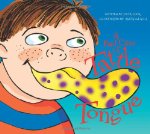
Poor Josh tattles on everyone — until he wakes up to find his tongue has turned long, yellow, and covered in purple spots! Will his very own Tattle Tongue finally teach him a lesson? Kids absolutely love this one!
Armadillo Tattletale by Helen Ketteman
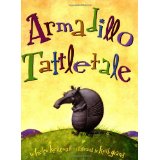
Armadillo’s ears are so big he can hear everything — and he cannot resist sharing what he hears! A funny and clever story about listening carefully and thinking before you speak!
Don’t Squeal Unless it is a Big Deal: The Tale of Tattletales by Jeanie Franz Ransom

This practical book helps young children understand the difference between tattling and reporting something serious. Warm, funny, and full of relatable situations that spark great classroom conversations!
Little Miss Tattletale by Konni Jo Bryant

Ariel tattles so much she actually grows a tail — and her classmates are not impressed! A fun and spunky story that teaches kids the difference between tattling and telling!
Tattlin’ Madeline by Carol Cummings Ph.D
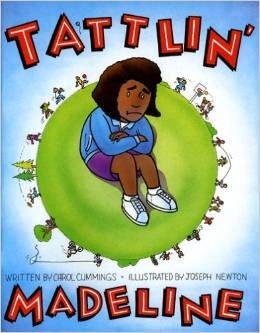
Written in rhyme and perfect for read-alouds, this book helps young children understand the difference between tattling and reporting in a fun and memorable way! Great for guided reading too!
Miles McHale, Tattletale by Christianne Jones
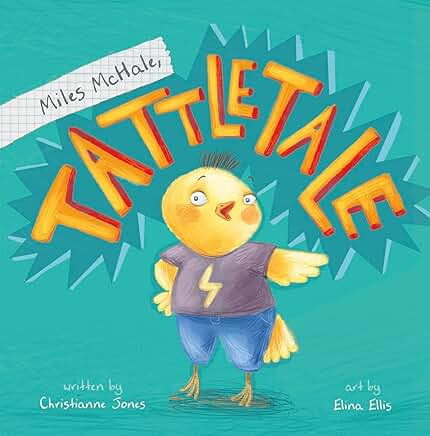
Miles McHale is a tattletale — and everybody knows it! A fun and relatable story about learning when to tell a grown-up and when to handle things yourself!
Tattletale Tilly: Teacher’s Pet by David Bullock
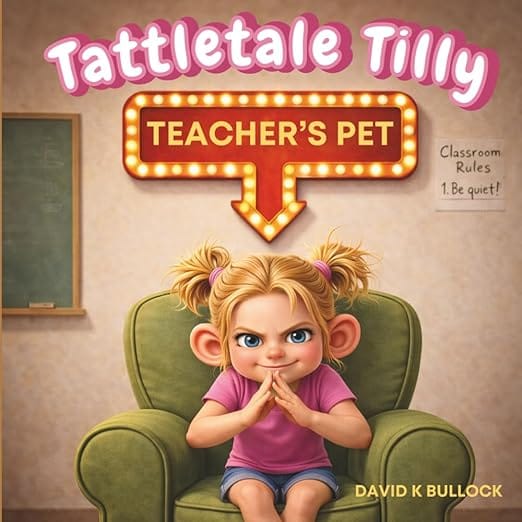
With eyes like melons and ears like Frisbees, Tilly spots every rule-breaker in school — but being the best tattler means nobody wants to be her friend! A hilarious rhyming story with a big heart and an important lesson! 💚
Tattling vs. Telling Activities
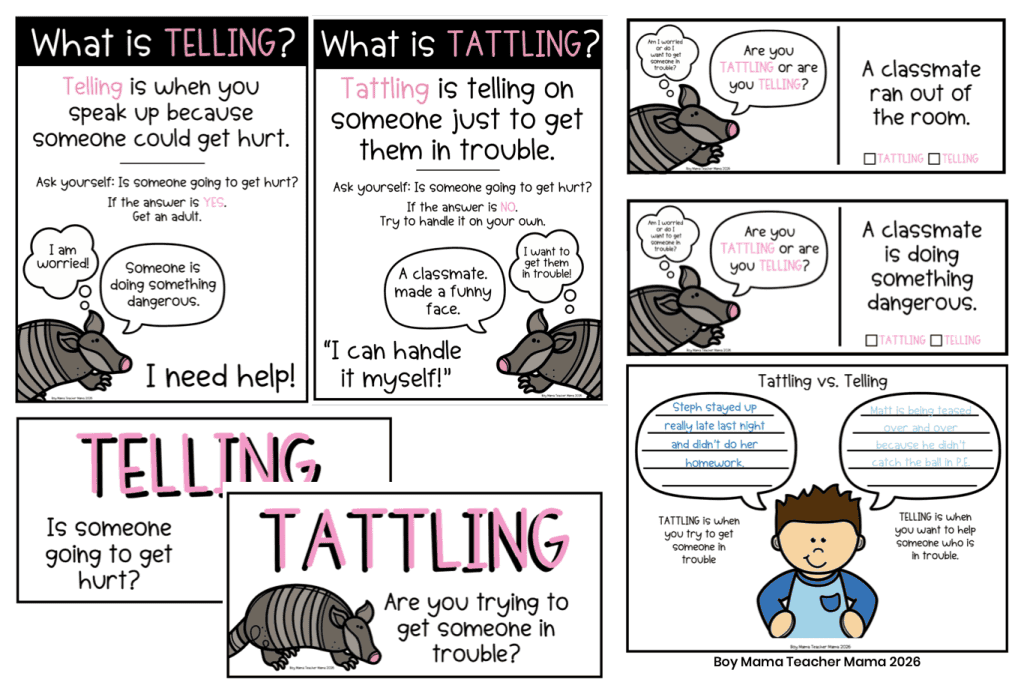
After reading a few of these books, your students will be ready to put their new learning into practice! My Tattling vs. Telling Activities provide meaningful opportunities for students to discuss real-life situations, sort examples, and reflect on when it is important to tell an adult and when they can handle a problem on their own.
Materials Needed
✔️Tattling vs Telling templates
✔️scissors
✔️pencils for student work
Preparing the Materials
✔️Download, print, and cut apart the scenario cards and headers
✔️Print and display the anchor charts
✔️Make copies of the writing activity for all your students
How to Use the Activities
💡Read and discuss the anchor charts to ensure that students understand the difference between tattling and telling
💡Choose a handful of scenario cards to discuss with the group. Be sure to use a few from each set. After discussing the scenario, students decide whether it describes tattling or telling, then place the card under the appropriate header.
💡After working as a group, have pairs or small groups go through a few of the scenario cards on their own.
💡When there is time, have students complete the independent writing activity where they write one example of tattling and one of telling.
Teaching the difference between tattling and telling takes practice, but the right books can make these conversations much easier. Whether you choose a humorous read-aloud like Armadillo Tattletale or a practical book like Don’t Squeal Unless It’s a Big Deal, these stories give students the tools they need to make better choices and solve problems independently.
Looking for a hands-on way to extend the learning? Grab Tattling vs Telling from our TpT store to give students meaningful opportunities to practice distinguishing between tattling and telling.
Which of these books about tattling is your favorite? Do you have one we missed? Share in the comments below — we would love to hear from you!
Related Activities:
How to Apologize: Easy SEL Activities
Teaching Tone of Voice with Picture Books
Think Before You Speak: Using Your Social Filter
If this is your first time visiting Boy Mama Teacher Mama, welcome!
Did you know that you can also find us on Facebook, Instagram, Pinterest, and Teachers Pay Teachers?
© Boy Mama Teacher Mama 2026
All Rights Reserved